It's 2026, and the Xbox ecosystem finds itself navigating a particularly choppy sea of public perception. What started as isolated technical hiccups and communication breakdowns a couple of years ago has, for some observers, evolved into a broader narrative of uncertainty. The core tension? Balancing the accessibility promise of the Xbox Series S with the high-fidelity demands of modern game development, all while maintaining clear, supportive relationships with third-party studios. The recent weeks have seen this tension play out in real-time, leaving fans and the industry alike scratching their heads about the platform's direction.
The Persistent Shadow of the Series S
Let's rewind. Back in 2020, Microsoft's two-pronged console strategy seemed genius: the powerhouse Series X for the hardcore, and the affordable, digital-only Series S for everyone else. The pitch was simple—same games, same ecosystem, just scaled for different budgets and TVs. Fast forward to today, and that "scale" part is proving to be a significant, ongoing challenge for developers.
Remember the Dune: Awakening saga? Its chief product officer, Scott Junior, once famously cited the Series S as "a challenge," a key reason for the game's PC-first launch strategy. That sentiment hasn't vanished into the Arrakis sands. In 2026, developers, especially those pushing graphical boundaries or managing vast open worlds, still whisper about the "S tax"—the extra optimization work required to get a game running acceptably on the less powerful hardware. It's not about if a game can run, but about the man-hours and resources needed to make it happen, which can delay releases or even make a port financially unviable for smaller studios.
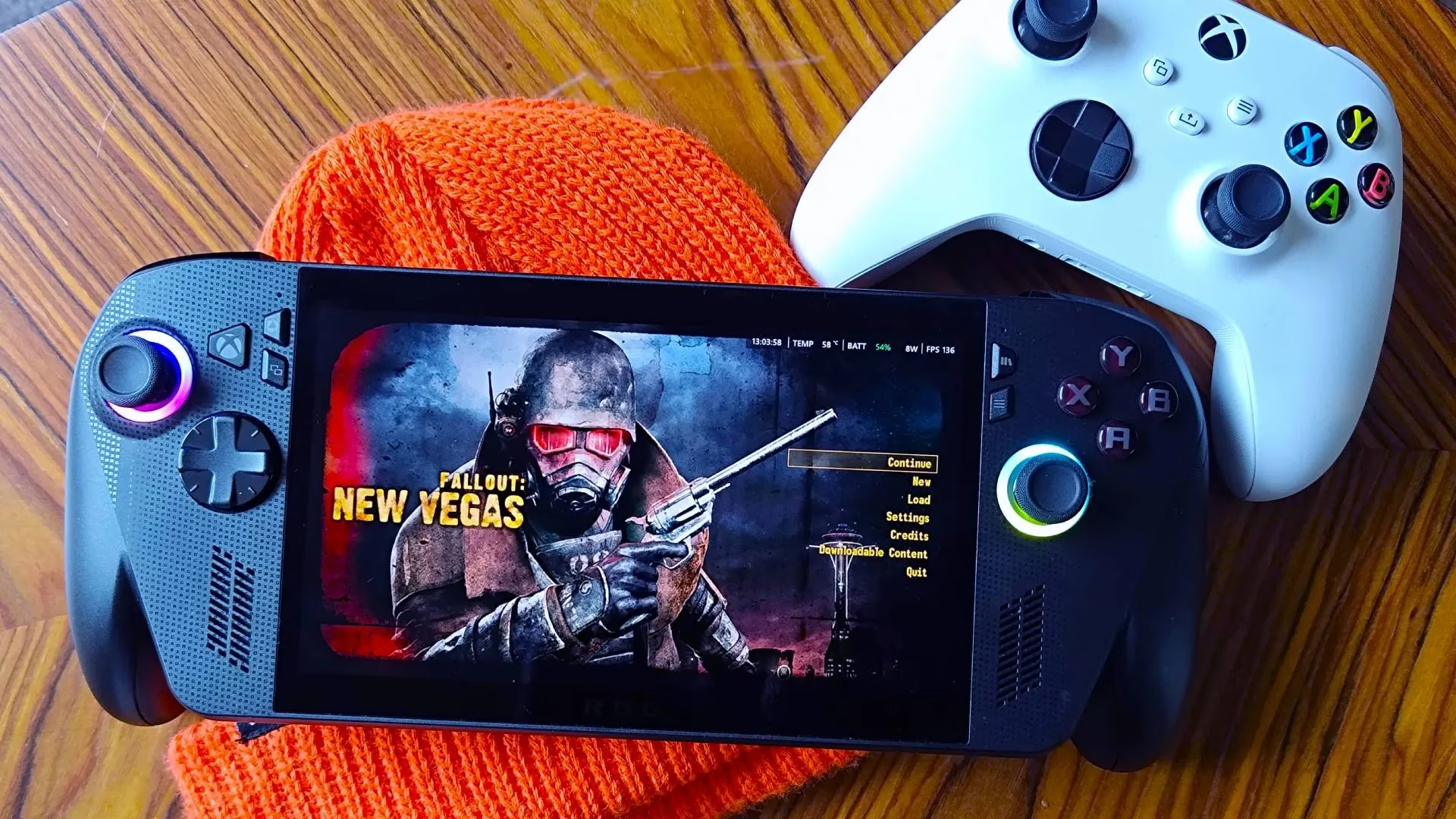
The Case of the Missing Monkey King: Black Myth: Wukong
If the Series S issue is the slow burn, the Black Myth: Wukong Xbox saga was the explosion that lit up the discourse. Initially, the delay was chalked up to pure optimization struggles—a textbook Series S story. But then, plot twists! Anonymous sources whispered about a possible "exclusivity deal" keeping it off Xbox, which was then vehemently denied by other insiders. The whole situation became a he-said, she-said mess, leaving the community in a state of total confusion. Was it tech? Was it business? No one outside the boardrooms knew for sure, and that opacity became the real story. It was a masterclass in how not to manage communication around a high-profile release.
When Silence Speaks Volumes: The Indie Developer Dilemma
Perhaps more damning than any technical hurdle is the growing chorus of indie developers expressing frustration with Xbox's communication—or lack thereof. The situation with Enotria: The Last Song became a poster child for this in 2024, and similar stories have occasionally surfaced since. The allegation is stark: being ghosted by the platform holder for months. For a small studio operating on razor-thin margins, such radio silence isn't just annoying—it's potentially catastrophic for planning and morale. As one dev put it bluntly back then, it can feel like "they don't care." This perception, whether entirely accurate or not, is a PR nightmare and sours the well for future partnerships.
So... What's the Vibe for Xbox in 2026?
Taking a step back, what's the current mood? It's... complicated.
-
For the Optimist: These are still largely isolated incidents. Every platform has development challenges and communication slip-ups. The Series S has brought gaming to millions who otherwise couldn't afford a new console. Game Pass remains an incredible value. Major titles like Indiana Jones and the Great Circle did eventually launch, and the PC ecosystem is stronger than ever.
-
For the Pessimist: The patterns are worrying. The Series S continues to be a developmental anchor. High-profile third-party relations seem rocky. The closure of studios like Tango Gameworks in 2024 shook faith in Microsoft's commitment to creative, single-player experiences. The vision feels less clear than it did at the start of the generation.
The Baldur's Gate 3 story is instructive. Its Xbox version was delayed for months until Larian and Phil Spencer personally "found a solution" (widely believed to involve dropping split-screen co-op on the Series S). It was a fix, but a messy one that required top-level intervention. The question for 2026 is: is that a scalable model for the future?
The Bottom Line
Xbox in 2026 is at a cultural and strategic crossroads. The value proposition is undeniable for many, but the narrative momentum has hit some serious speed bumps. The community's trust—from hardcore fans to indie developers—feels a bit fragile. Moving forward, clarity will be key. Clear technical expectations for developers, transparent communication with partners and players, and a compelling roadmap of exclusive experiences are the non-negotiables needed to turn the tide. The hardware strategy of 2020 is meeting the software reality of 2026, and the next few years will be all about how Microsoft navigates that collision. As they say in the biz, it's time to put up or shut up. The ball is in their court. 🎮⬇️