Alright, folks, buckle up. Here I am, just a regular gamer trying to enjoy my virtual adventures in peace, and I wake up to find my Steam community feed looking like a digital warzone. The year is 2026, and apparently, the fallout from the 2024 Game Awards is still causing seismic shifts in the gaming landscape. The latest drama? A battalion of Black Myth: Wukong fans has decided that Larian Studios' Baldur's Gate 3 needs to feel their wrath via the oldest trick in the disgruntled fan's book: the review bomb. It's like watching two of your favorite movie characters suddenly start throwing popcorn at each other in the theater. I just wanted to play some games, man!
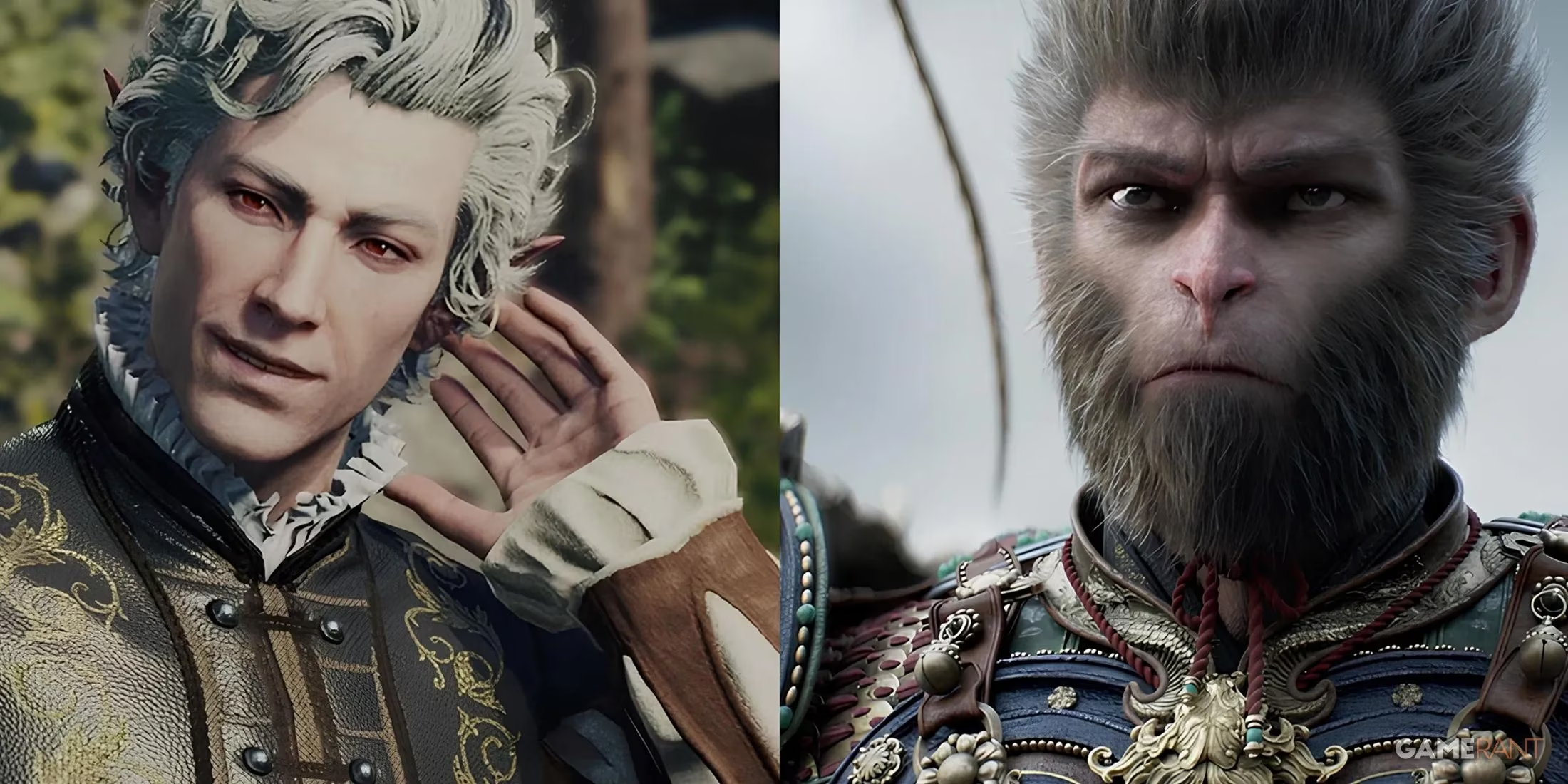
Let's rewind and set the scene. 2024 was a phenomenal year for games, but one title roared louder than most: Black Myth: Wukong. This game wasn't just a release; it was a cultural event. Selling over 20 million copies, it was the underdog-turned-titan that had everyone, including me, mesmerized by its breathtaking visuals and intense action. It was a shoo-in for nominations at The Game Awards 2024 (TGA), and the hype was real. We all watched, popcorn in hand, as it snagged Best Action Game and the Player’s Voice award. But then, the big one—Game of the Year—went to the charming little bot, Astro Bot. Cue the record scratch and the collective gasp from a significant portion of the gaming world.
The disappointment was palpable. I get it. When you're emotionally invested in a game's success, a loss stings. But here’s where the plot, as they say, thickened. Instead of directing this energy at the actual winner (Astro Bot), a segment of Wukong’s fanbase turned their gaze… sideways. Their target? The previous year's champion, Baldur’s Gate 3. Why? The catalyst seems to have been the speech given by Larian's head honcho, Swen Vincke, who was on stage to present the 2024 Game of the Year award.
During his speech, Vincke made some poignant remarks about the winner, saying it "didn't have to meet arbitrary sales targets" and "didn't treat their developers like numbers on a spreadsheet." Noble sentiments about artistic integrity, right? Well, somewhere in the translation and transmission, a fuse was lit. On social media and then directly on Baldur’s Gate 3’s Steam page, a wave of negative reviews appeared. The angry comments had a common theme: an accusation that Vincke was dismissing the importance of commercial success—a sore point for fans proud of Wukong’s monumental sales figures.
This is where things get messy, and my gamer-sense starts tingling. Let's break down the probable causes of this digital friendly fire:
-
The Translation Tango: There were widespread reports at the time of a pretty dodgy Chinese translation of the TGA broadcast. Vincke’s nuanced praise for a game's development culture might have been translated into something that sounded like a direct critique of commercially successful games. If true, this is a classic case of a game of telephone gone horribly wrong on a global scale.
-
The Unavailable Target: Astro Bot, the actual GOTY winner, isn't on Steam. You can't review bomb a game that isn't there. Baldur’s Gate 3, however, is a permanent, popular fixture on the platform—a convenient and visible proxy for expressing general frustration about the awards show outcome.
-
A Producer's Lament: Adding fuel to the fire, Black Myth: Wukong's producer, Feng Ji, publicly expressed his confusion and sadness after the loss. He mentioned he couldn't "figure out what the criteria was for Game of the Year" and had even written an acceptance speech two years prior. While this was likely just heartfelt disappointment, it may have validated the feelings of the most passionate (and volatile) fans.
So, what we have is a perfect storm: award show disappointment + potential mistranslation + a high-profile, accessible target + emotional public statements from the devs. The result? Baldur’s Gate 3’s review section getting hit by shrapnel from a conflict it wasn't even a part of.
Now, let's be clear. This isn't the first time the gaming community has seen this playbook. Review bombing has become an unfortunate, ugly tactic. Just last month, Dragon Age: The Veilguard was hit with a similar barrage for entirely different (and often toxic) reasons. It's a blunt instrument that rarely addresses any real issue and mostly just creates noise and animosity.
As a player who loves both of these games for very different reasons, the whole situation just makes me sigh. On one hand, you have Black Myth: Wukong—a stunning, groundbreaking title that proved a monumental point about the global reach and quality of game development. On the other, you have Baldur’s Gate 3—a game that redefined depth, player choice, and support for its developers, setting a new standard for the industry. They are both titans. They should be celebrated, not pitted against each other in some bizarre, post-awards gladiatorial combat.
The irony is thick enough to cut with a legendary sword. Vincke's speech was ultimately about respecting developers and the art of game-making. The review bomb campaign, ostensibly launched in defense of a game and its developers, directly attacks another set of developers and their art. It’s a cyclical, self-defeating mess that only hurts the community.
So, what's my takeaway from all this, sitting here in 2026? Awards are nice. Recognition feels great. But at the end of the day, the real victory is in the games themselves and the joy they bring to millions of players worldwide. Black Myth: Wukong’s legacy is secure, not in a trophy, but in its 20 million+ copies sold and the awe it inspired. Baldur’s Gate 3’s legacy is secure in its revolutionary design and devoted fanbase. Let's put down the digital pitchforks, appreciate the art, and maybe save our competitive fury for the actual games—like finally beating that one impossible boss in Wukong or figuring out a new chaotic strategy in BG3. Now that's a war worth fighting. 🎮✨