I first stepped into Black Myth: Wukong as the Destined One in 2024, and when I returned to it in 2026, I realized the game had taught me a very specific kind of patience. It is, as I once read, both confounding and spectacular. It is an action RPG soulslike with XP, a skill tree, and shrine checkpoints that save my progress while respawning enemies. Yet it refuses to be a pure grind. There is not really a gameplay loop in the way I expected. I travel from shrine to shrine, dispatch yaoguais along the way, and then slam into another boss. The pull is not farming; it is reaching the next fight. And in 2026, that pull still works on me.
The Shrine-to-Shrine Pilgrimage
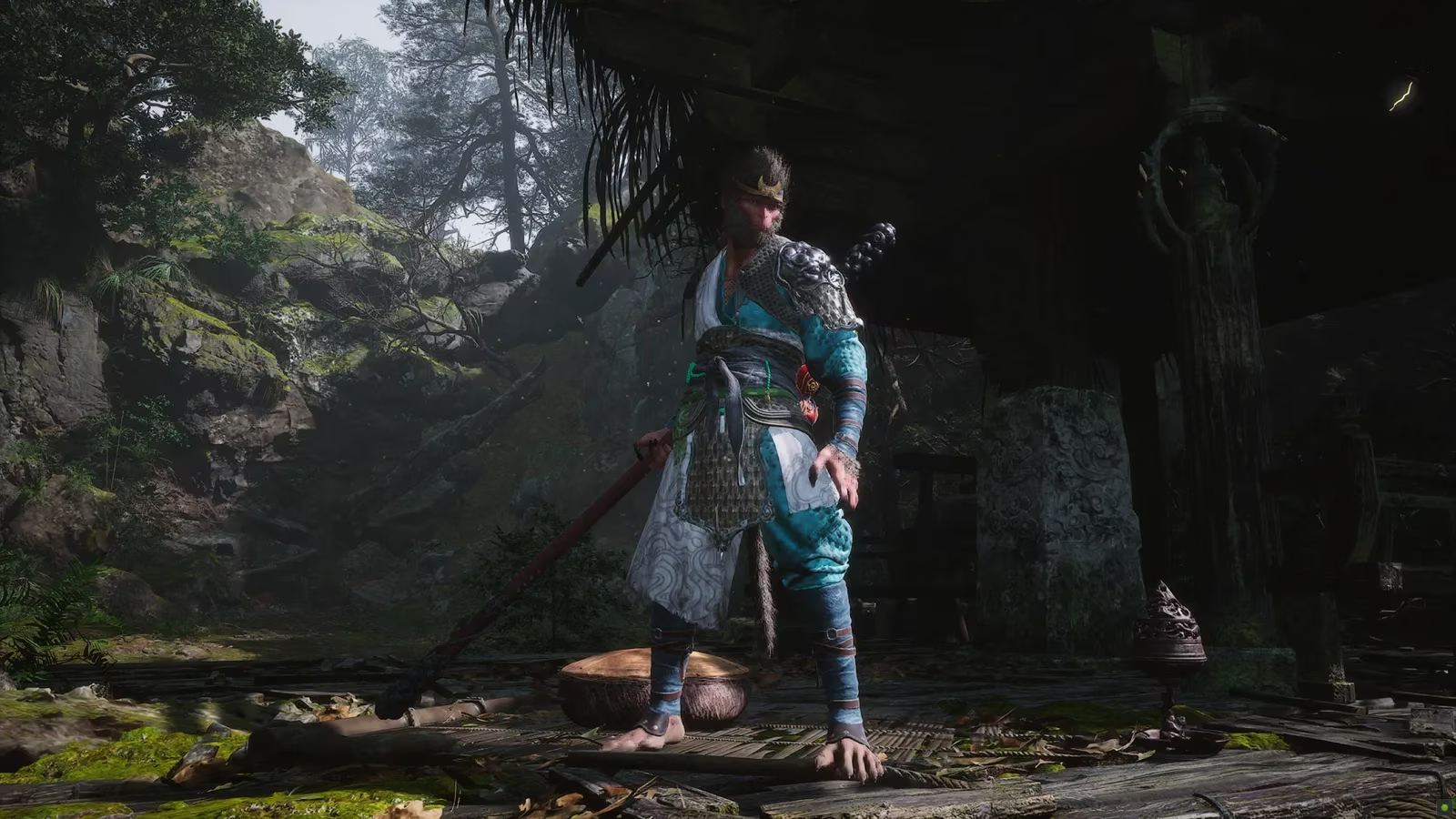
I learned early that Black Myth: Wukong is linear in a way that surprised me. You move from shrine checkpoint to shrine checkpoint, and the routes between them do have branching paths. Almost every branch is worth exploring. I usually find at least a chest, and sometimes an optional boss fight. Those optional bosses give plenty of XP and often rare upgrade materials. If nothing else, I find ingredients. Which, for a long time, feel useless.
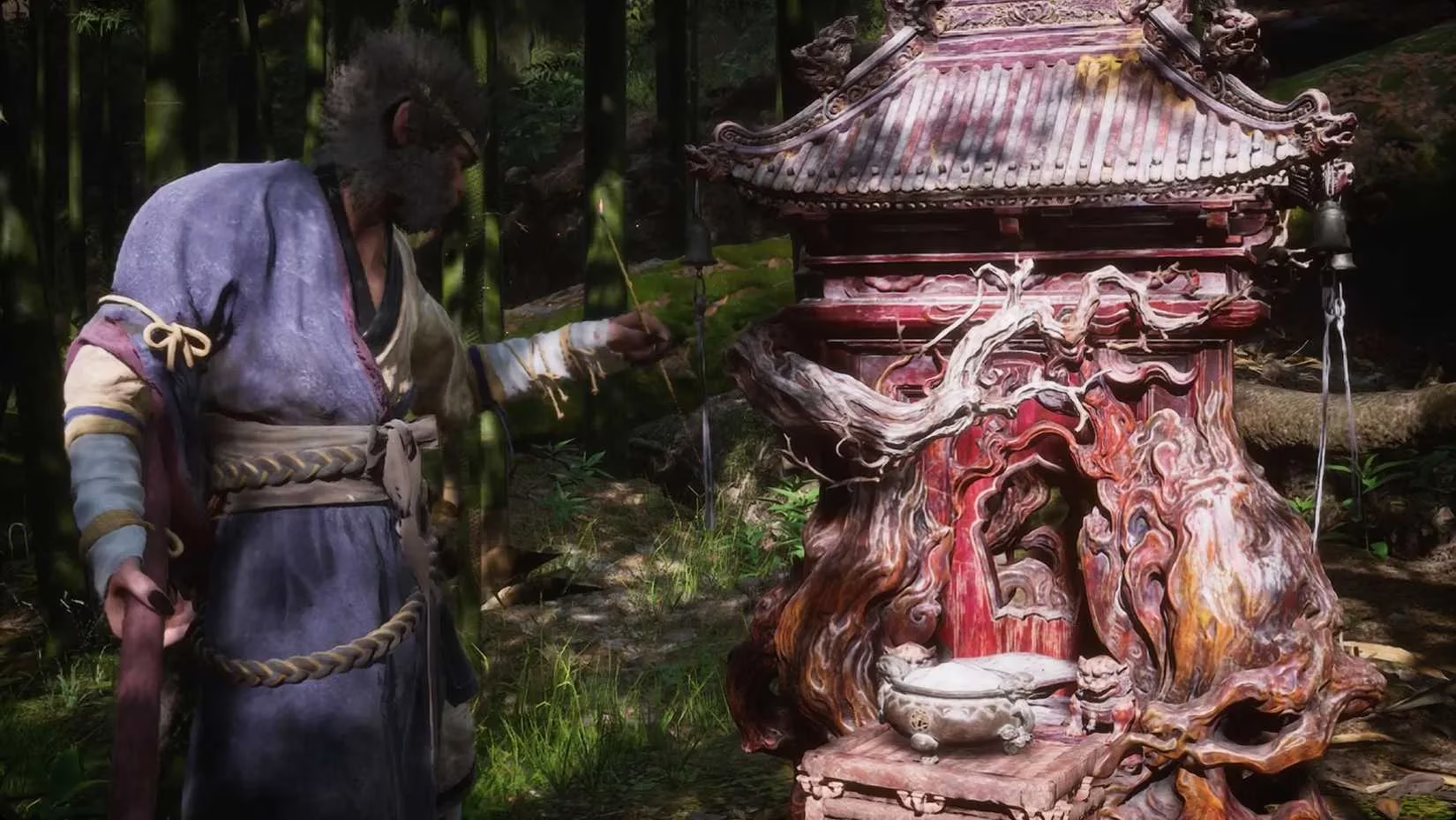
That uselessness is real. I picked plants and mushrooms all through the early game. Their descriptions said they could be used to make medicines, but I could not do anything with them. The mechanic does not unlock until chapter 2, several hours in. So if you are starting in 2026 and wondering why your inventory is full of herbs, relax. You are not missing a hidden menu. You are just early. 🧪
The Wandering Wight Taught Me to Run
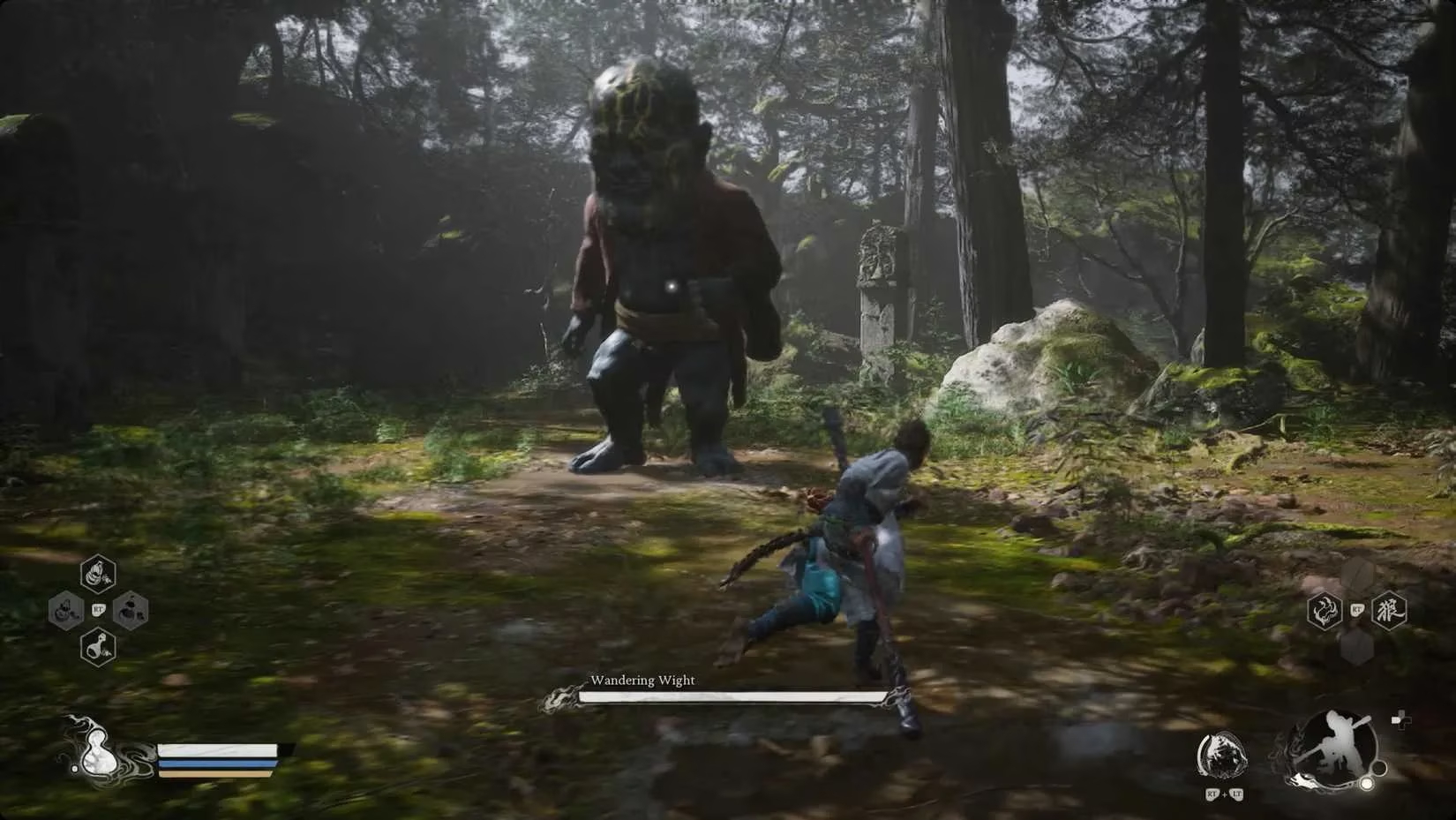
Very early in Black Myth: Wukong, I ran into an enemy called a Wandering Wight. The first time I met it, I could not beat it. Well, it is possible, but it is not going to happen for a new player. The trick with that fight is that the way forward is past that enemy. You just have to run past it. That is not going to work for most fights, but it is an important lesson about how the game works. You get a lot more powerful and have more skills to draw from as you progress linearly. If I hit a hard enemy or boss, I can always come back later once I am a bit stronger.
Fast Travel Without a Map
I can fast travel from any shrine to any other shrine I have previously visited. But there is no map, so it is a little awkward at first. When I choose to travel, I get a list of shrine names and their region. The names are descriptive enough, though, so it is not too hard to figure out where I am going. 🏯
| What I want to do | What the game gives me |
|---|---|
| Jump to an old area | A list of shrine names and regions |
| Find a specific boss | Remember the region name |
| Get back to a vendor or crafting spot | Travel to the nearest shrine |
Equipment, Staffs, and Set Bonuses
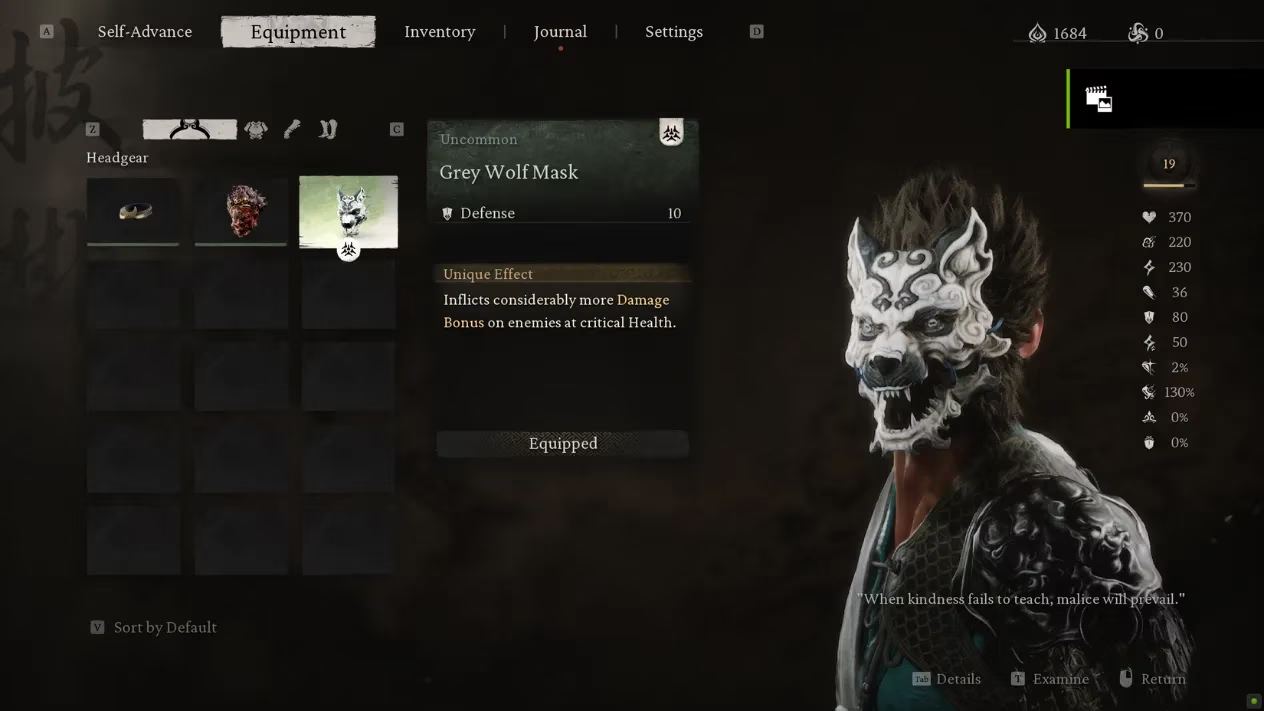
As I progress through Black Myth: Wukong and defeat bosses, I unlock new equipment to craft at shrines. I only ever fight with one weapon: various versions of a staff. That part is easy enough to understand. The clothes are more interesting. Gear for my head, body, legs, and arms has unique effects that I gain while wearing them. These include damage bonuses or speed increases. Some equipment has a number next to the unique effect. That number tells me how many pieces of that set I need to be wearing to activate the unique effect.
I also learned that armor and weapons are not really unlocked in a traditional sense. I do not grind for a blueprint. I just reach a certain shrine and the crafting recipes for new equipment are automatically unlocked. The same goes for spells. They are just given to me after beating certain bosses. That linearity is freeing once I accept it. I stop worrying about missing a build-defining drop and start focusing on the journey.
Secrets, Vessels, and Optional Help
While Black Myth: Wukong is mostly linear, I found various secrets off the beaten path. Some of these reward Vessels, which are accessories that grant helpful perks. I had to track down hidden bell locations, help the Yellow-Robed Squire, find and deliver all Buddha's Eyes, and unlock medicine. None of that is required to finish the game, but it makes the pilgrimage richer. 🔔
In 2026, my advice to a new Destined One is simple. Do not sprint from shrine to shrine. Explore the branches. Run past the Wandering Wight if you must. Come back to hard bosses later. Collect your herbs even when they seem pointless. And pay attention to your armor sets, because a small set bonus can change a fight. Black Myth: Wukong is confounding and spectacular, and that combination still feels fresh to me. ⚔️
If you are starting now, take your time. The game is linear, but it is not shallow. Every shrine is a breath, every boss is a wall, and every secret is a small reward for curiosity. That is what I learned as the Destined One, and it is what I would tell anyone picking up the staff in 2026.