The hype is real, folks! Back at Gamescom, I got my hands on the Phantom Blade Zero demo not once, but twice—and let me tell you, the second run was a whole different beast after a developer dared me to crank up the difficulty. From the very first clash of steel, this game had its hooks in me deep. Every trailer leading up to this moment promised something special, and I'm thrilled to report the gameplay doesn't just match the hype; it absolutely smashes it.
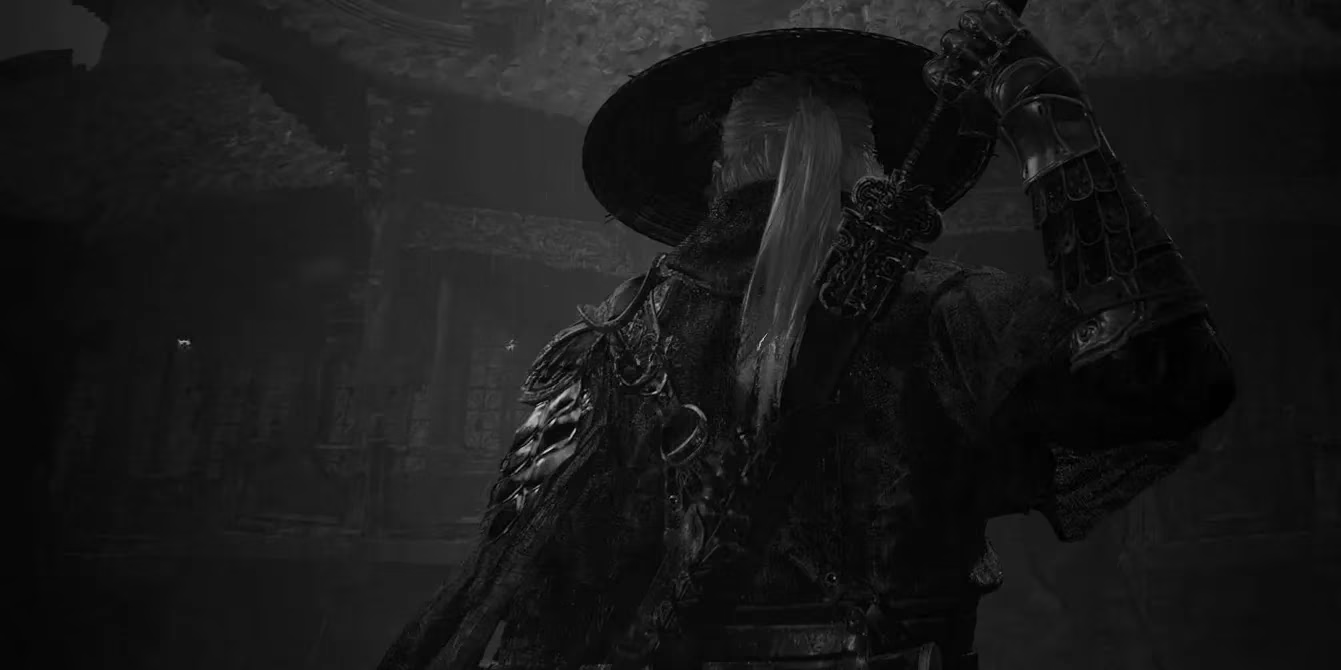
The Dance of Death: Three Bosses to Conquer
The demo threw me into the fray against three formidable bosses, each more punishing than the last. My journey began by cutting through a small mob of grunts before the real challenge appeared:
-
Tie Sha the Frenzy 🤯
-
Commander Cleave ⚔️
-
Huangxing, the Sunken Pillar of Kunlun 🏯
My first playthrough clocked in at 16 minutes with a humble 5 deaths. When the difficulty spiked, I somehow shaved that down to 11 minutes (still with 5 deaths, because pride is a dangerous thing). Don't mistake that for the game being easy—oh no, it's anything but. It's a testament to how intuitively brilliant the combat feels once you sync with its rhythm. Playing this right after the monumental Black Myth: Wukong was an experience, and the similarities in their ambition are impossible to ignore.
Finding Its Own Identity in a Crowded Arena
Let's address the elephant in the room. While Black Myth: Wukong leans heavier into that punishing Soulslike atmosphere, Phantom Blade Zero carves its own path. Think less methodical pacing and more character-action chaos—the kind that made Ninja Gaiden and Devil May Cry legendary. It's like comparing a calculated chess match to a beautifully choreographed street brawl. Both are Chinese studios (Game Science and S-Game, respectively) wearing their inspirations on their sleeves, yet both are fiercely proud of their cultural roots. Wukong draws from Journey to the West, while Phantom Blade Zero is a spiritual rebirth of the cult classic Chinese indie RPG, Rainblood: Town of Death.
And honestly? Even if those references fly over your head, it doesn't matter one bit. Strip away the lore and unique flavor, and at its core, this is just a super appealing, incredibly well-designed game. The fun is universal.
Combat: Where Rhythm Meets Razor-Sharp Precision
My first run was basically a crash course in pain. I charged headlong into enemy packs to learn the timings, abilities, and flow. I got hit, I blocked, I weaved, separating enemies and picking them off. I even took out two archers the hard way, only to realize later I could've just taken the high ground. Oops! 😅 But the moment Tie Sha the Frenzy appeared, the game went from "fun" to "holy cow, this is impressive."
This is a game of rhythm and reaction. Blocking, parrying, and dodging aren't just options; they're the language of survival. Tie Sha barely let me breathe, forcing me to learn his patterns. At first, blocking was a panic button, but soon I was in the zone—landing perfect parries, executing flawless dodges, and countering with devastating Ghost Steps to get behind him. Breaking his Shai Chi to open him up for a massive Power Surge ultimate felt unbelievably satisfying. Commander Cleave continued this demanding dance.
Make no mistake, these bosses are TOUGH. As a veteran of Soulslikes and character-action games, the required focus was intense. What makes it work is the superb design:
| Design Element | Why It Works |
|---|---|
| Clear Telegraphs 👀 | Boss moves are well-signaled, letting you learn, not just guess. |
| Distinct Combat Rhythm 🎵 | Each fight has its own tempo you can learn and master. |
| Intuitive Weapon Feel ⚖️ | Heavy weapons feel heavy, dual blades feel fast and fluid. |
The combat is so fluid that swapping weapons instantly restores your stamina, a genius system that encourages constant aggression and adaptation. You're always engaged, always balancing offense and defense.
The Curveball: Huangxing's Temple Test
Just when you think you've got the formula down, the game throws a curveball. Enter the third boss, Huangxing. His standard attacks are finely tuned like the others, but the arena itself becomes part of the fight. He starts at the far end of a temple and immediately launches a brutal aerial chain attack. The game gives you options:
-
Interrupt him with a ranged Phantom Edge. 🏹
-
Hide behind a pillar (the smart move). 🏛️
-
Parry the falling chain based on a split-second white flash of light (the... stubborn move). 💡
Guess which one I chose? Yep. Most of my deaths were a direct result of my pride, trying to nail that insanely tight parry window. He was a different kind of challenge, with his own rhythm to decipher, proving Phantom Blade Zero truly understands the depth of rhythmic, skill-based combat. Beating him on the harder difficulty felt like a genuine achievement.
A Small Nitpick & The Final Verdict
If there was one aspect that felt underutilized in the demo, it was the Phantom Edges (special ranged weapons). Using a bow to pick off distant foes or interrupt Huangxing was possible, but it felt disruptive to the sublime melee flow. That said, with the full game promising many more tools, it'll be fascinating to see how these impact different builds and playstyles.
So, what's the bottom line? Phantom Blade Zero isn't just talk. Its trailers showed style, and its gameplay delivers immense substance. It's a rhythmic, demanding, and incredibly rewarding character-action experience. If you've ever lost yourself in the combat of Ninja Gaiden, Devil May Cry, or even felt the thrill of Black Myth: Wukong, mark your calendars for 2026. This blade is being sharpened for something truly special. The wait is going to be a killer.