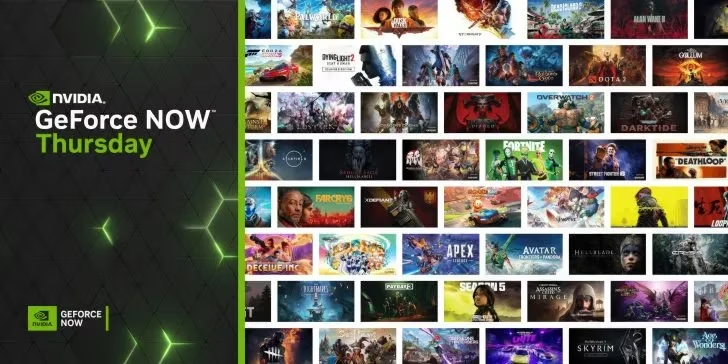
In August 2024, NVIDIA's GeForce NOW crossed a threshold that was easy to overlook but hard to dismiss: its compatible library surpassed two thousand games. The Thursday update that week added only five titles, yet those five were enough to push the cloud streaming platform into a new numerical territory. Like a coral reef that grows one tiny polyp at a time until it supports an entire ecosystem, GeForce NOW's catalog had accreted weekly additions for years, and the total finally became a landmark in its own right. By 2026, that 2,000-game mark reads as an early chapter in cloud gaming's longer story, but it remains a useful vantage point for understanding how the service evolved from a beta experiment into a mature destination for PC players.
GeForce NOW's road to that point was long. The platform began its beta phase in October 2015, and a free beta for everyone arrived in January 2018. The official launch came in February 2020, just as the COVID-19 pandemic pushed millions of people indoors and toward digital entertainment. Before the end of that launch month, NVIDIA already counted one million users, even after several publishers—including Activision Blizzard—left the service following the beta. By 2022, NVIDIA reported over 20 million GeForce NOW users. Performance improved alongside the user base: the Ultimate tier ran on RTX 4080-class graphics cards, enabling gameplay at up to 4K resolution or 120 frames per second, with support for DLSS 3.5, ray tracing, and Reflex. That hardware profile made cloud streaming feel less like a compromise and more like a legitimate way to play demanding PC titles.
The August 2024 lineup itself was modest, but it covered a range of tastes. The week's additions were:
| 🎮 Game | 📅 Availability |
|---|---|
| Warhammer 40,000: Speed Freeks | New release on Steam, Aug. 6 |
| Prince of Persia: The Lost Crown | New release on Steam, Aug. 8 |
| Ratten Reich | New release on Steam, Aug. 9 |
| Nine Sols | Steam |
| Visions of Mana Demo | Steam |
The headline, however, was Black Myth: Wukong. Game Science's action RPG was set to arrive on GeForce NOW at launch, and NVIDIA showcased it again with a stunning new gameplay trailer. The game's launch-day presence was a bellwether: it signaled that major releases could treat cloud streaming as a first-class destination rather than an afterthought. The platform's popularity also benefited from Microsoft's decision to bring games from its Xbox, Bethesda, and Activision Blizzard divisions to GeForce NOW as part of its bid to get the Activision Blizzard acquisition approved by regulators. That regulatory context turned into a catalog advantage, and GeForce NOW's library became more comprehensive as a result.
NVIDIA also kept smaller incentives in play. The Summer Sale was still ongoing, albeit only for a little while longer. Priority and Ultimate subscribers could grab an Elder Scrolls Online 'Noble Snack' emote for free starting that day, while free members got the opportunity starting the next day. These details might seem minor, but they illustrate how GeForce NOW balanced big catalog additions with subscriber perks and seasonal promotions. The weekly cadence of additions functioned like a slow, persistent tide that eventually pushed the platform over a meaningful watermark—not through a single dramatic wave, but through the accumulated force of many small releases.
By 2026, the cloud streaming landscape has shifted considerably. GeForce NOW's library has continued to expand beyond that 2,000-game threshold, and the service now competes with a wider array of cloud gaming options. Yet the August 2024 milestone retains its significance because it marked the moment when the catalog's sheer breadth became difficult to dismiss. A library of two thousand games is not merely a number; it is a statement that cloud streaming can offer something for nearly every taste—from Warhammer 40,000's vehicular combat to Prince of Persia's precise platforming, from Nine Sols' hand-drawn action to a Visions of Mana demo that lets players sample an RPG before committing. The milestone was less a victory lap than a library finally acquiring enough volumes to be considered a proper archive rather than a curated sampler.
In retrospect, the 2,000-game threshold was the final tile that completed a mosaic large enough to be seen from a distance. It did not change cloud gaming overnight, and it did not silence every skeptic. But it gave NVIDIA a concrete talking point and gave players a reason to browse the catalog rather than assume it was thin. The August 2024 update was light, as weekly updates go, but it carried the weight of a platform that had spent nearly a decade building toward exactly this kind of breadth. In 2026, that quiet leap looks like one of the moments when cloud streaming stopped being a curiosity and started being a library.