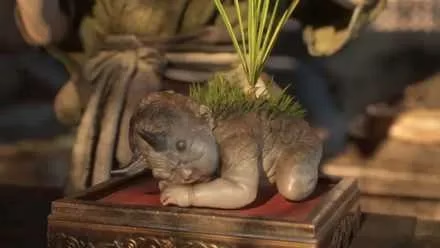
In 2026, as generative AI continues to infiltrate every corner of game development, Game Science has drawn a line in the sand. 🎮 The studio behind 2024's Black Myth: Wukong has confirmed that its upcoming sequel, Black Myth: Zhong Kui, will be built without AI-generated content. The decision, announced by art director and co-founder Yan Qi on the Chinese social media platform Weibo, was not born of fear or resistance. Instead, it is a deliberate choice to preserve the human touch—a choice inspired by none other than Christopher Nolan.
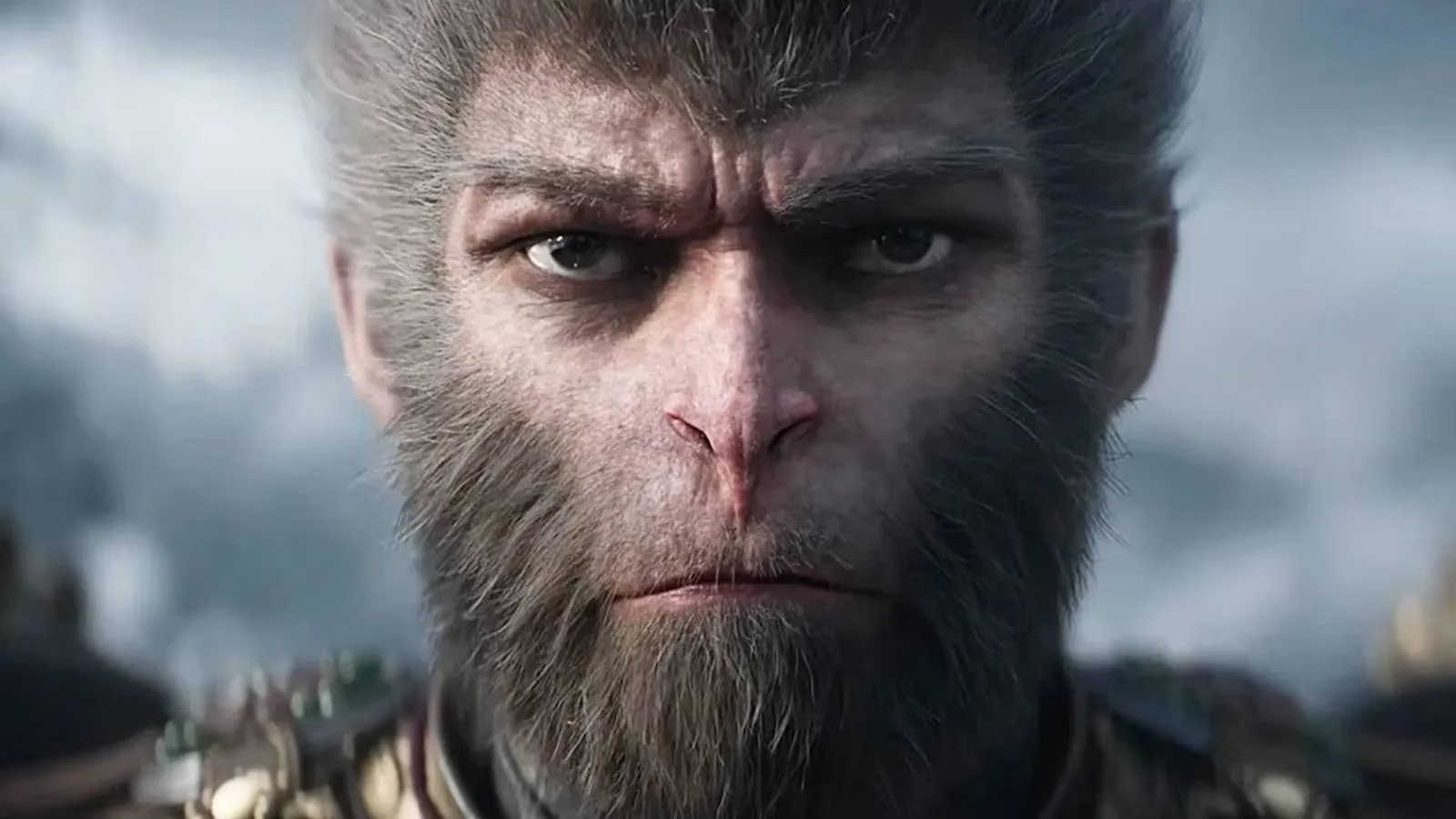
Yan Qi responded to a fan who asked whether AI could accelerate development. "We'll steer clear of AI-generated content during the design and asset phases," he said, as translated by a ResetEra user. "Not out of resistance, but simply to stand our ground until the very end." He then offered a metaphor: not needing to catch the last train. "We can just stay at a small inn for a while... no rush."
That unhurried philosophy extends to the studio's creative approach. Qi pointed to filmmaker Christopher Nolan as a beacon. "At a time when digital filmmaking and 3D post-production seem to have reached a dead end, look at Nolan," Qi wrote. "He's thriving, using even older techniques to shake things up." Nolan's insistence on practical effects and shooting on film has made him one of the most celebrated directors of our time, even as big-budget cinema often leans on CGI spectacle. Audiences, Qi implies, can feel the difference when art is crafted by human hands.
The Nolan Analogy: Why Older Techniques Still Win 🎬
Qi's reference to Nolan is more than a passing comparison. He previously shared that watching Nolan's latest epic, The Odyssey, left him deeply inspired. In a landscape where digital tools promise speed and efficiency, Nolan's methodical, tactile filmmaking stands as a counterargument. He doesn't chase trends; he trusts craft.
Game Science seems to be adopting the same ethos. The studio's stance isn't anti-technology—it's pro-human. As Qi put it, the goal is to "stand our ground until the very end." That means no AI-generated assets, no shortcuts in design. The team wants every blade of grass, every armor detail, every facial expression to come from a person's imagination and skill.
This isn't the first time Game Science has pushed back against AI. In 2024, lead performance director Beth Park said that technology loses the "human, chaotic emotion" of artistic creation. That messy, unpredictable element—the very thing that makes a performance feel alive—is what AI cannot replicate. Park's words now echo in Qi's latest statement, forming a consistent philosophy for the studio.
What This Means for Black Myth: Zhong Kui 🐉
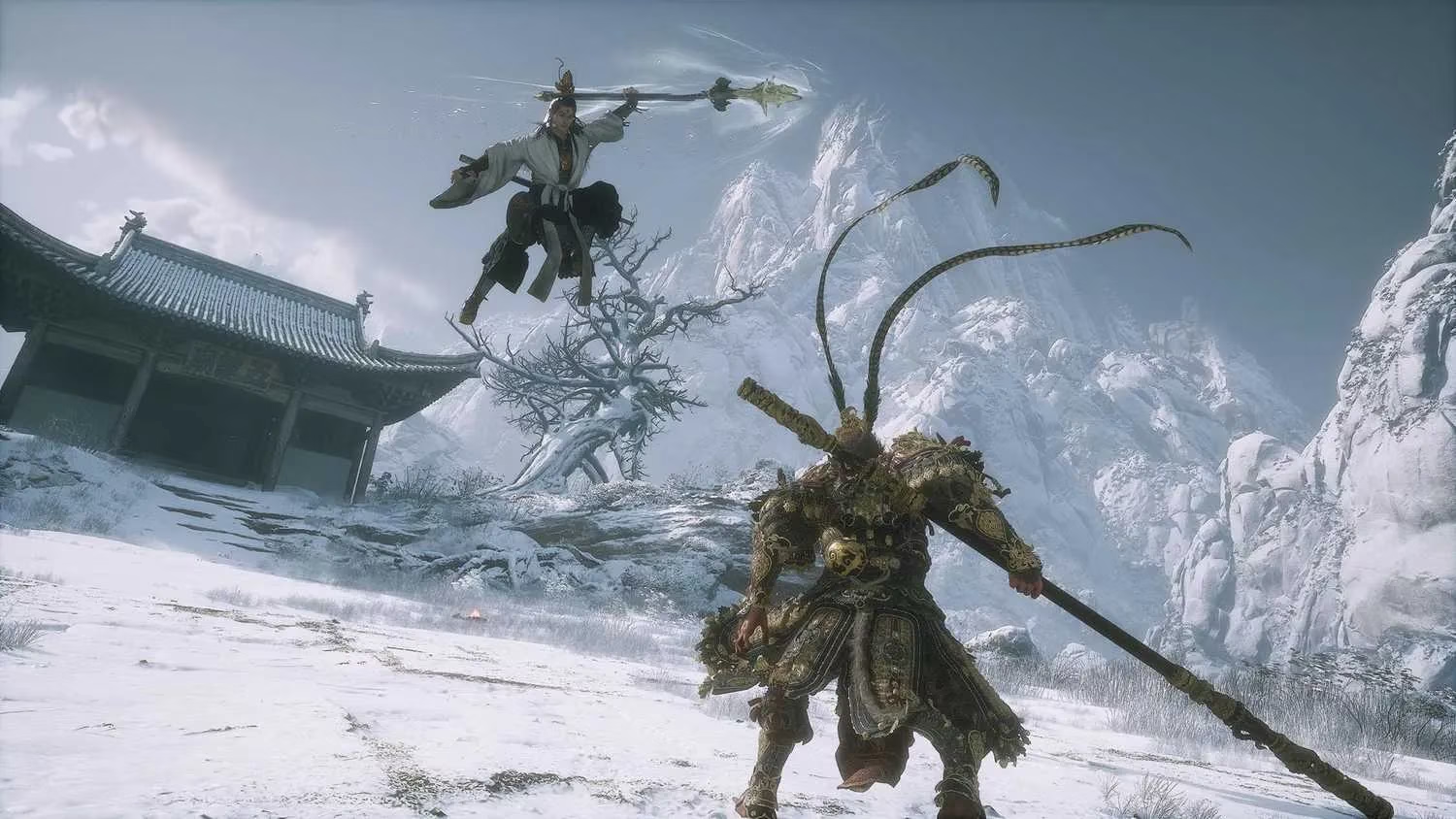
Black Myth: Zhong Kui was first announced in 2025 during Gamescom Opening Night Live. It is the follow-up to Black Myth: Wukong, a game that captivated millions with its stunning visuals and challenging combat. Game Science has not announced a release window for the sequel. And according to Qi, there's no rush.
| Aspect | Game Science's Approach | Industry Trend |
|---|---|---|
| Design & Assets | Human-crafted, no AI | Increasing AI generation |
| Development Pace | Unhurried, quality first | Fast, iterative |
| Inspiration | Christopher Nolan's practical effects | Digital shortcuts |
| Philosophy | "Human, chaotic emotion" | Efficiency and automation |
The table above highlights the contrast. While many studios race to integrate AI, Game Science chooses patience. It's a risky move in an industry that often rewards speed. But the studio has earned goodwill. Black Myth: Wukong sold millions and won critical acclaim. Fans trust Game Science to deliver something special, even if it takes time.
The Broader Debate: AI in Game Development 🤖
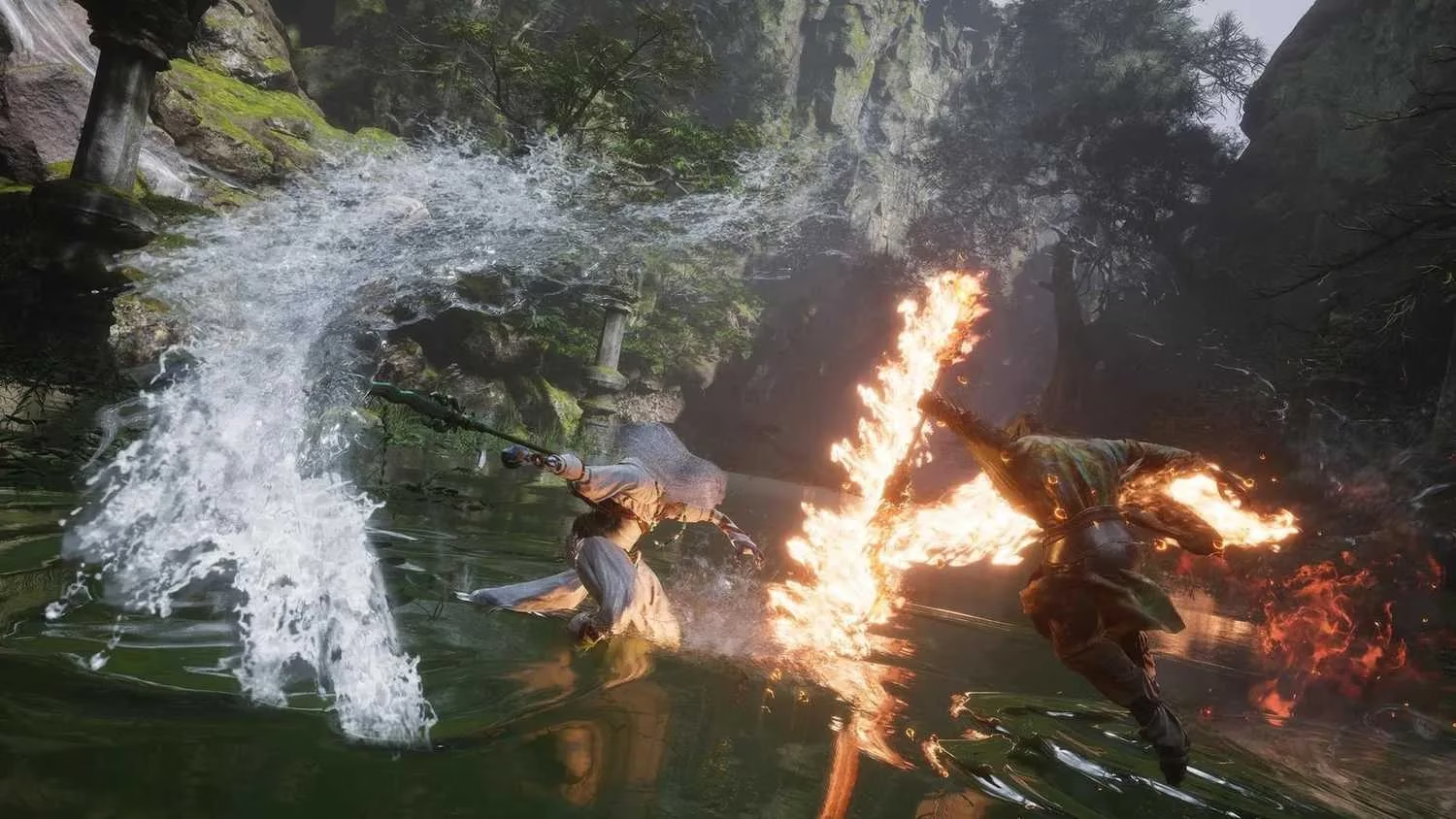
The use of generative AI in games is increasingly contentious. Some developers see it as a tool to cut costs and speed up production. Others worry about ethics, job displacement, and the loss of artistic identity. Game Science's stance adds a prominent voice to the latter camp. Key concerns include:
-
🚫 Loss of human touch in art and performance
-
💸 Potential job losses for artists and designers
-
🎭 Ethical questions about training data and originality
-
⏳ The pressure to rush games to market
Qi's train metaphor resonates. In a world obsessed with being first, the studio is willing to wait at a small inn. That patience might just produce a game that feels more human—more chaotic, more alive. As Qi said, "We can just stay at a small inn for a while... no rush." For a studio that took the world by storm with a monkey king, perhaps the next legend will be a demon slayer named Zhong Kui. And it will be built by hands, not algorithms.