It was a crisp autumn evening in 2026 when Marco finally slotted the disc of Black Myth: Wukong into his console. Two years after its explosive launch, the game had settled into legend—a milestone in action-adventure storytelling and a lodestar for the soulslike genre. The disc had been gathering dust on his shelf, a victim of a packed schedule and a fear of the 100-hour time sinks that had consumed his friends. But tonight, with a steaming cup of tea and the house to himself, he was ready to storm the heavens.
An hour later, Marco stared at the screen in bewilderment. He had expected a slog, a grind of frustration and fleeting triumph. Yet here he was, already deep into the Black Wind Mountain, cackling at the audacity of a boar spirit and secretly amazed at how smoothly the hours had passed. The developers at Game Science had once promised a 15- to 20-hour core adventure—a number that had held steady since their first showcase in 2020. That, Marco thought, seems almost too friendly for such an epic. But little did he know, the journey was about to stretch in ways he never imagined.
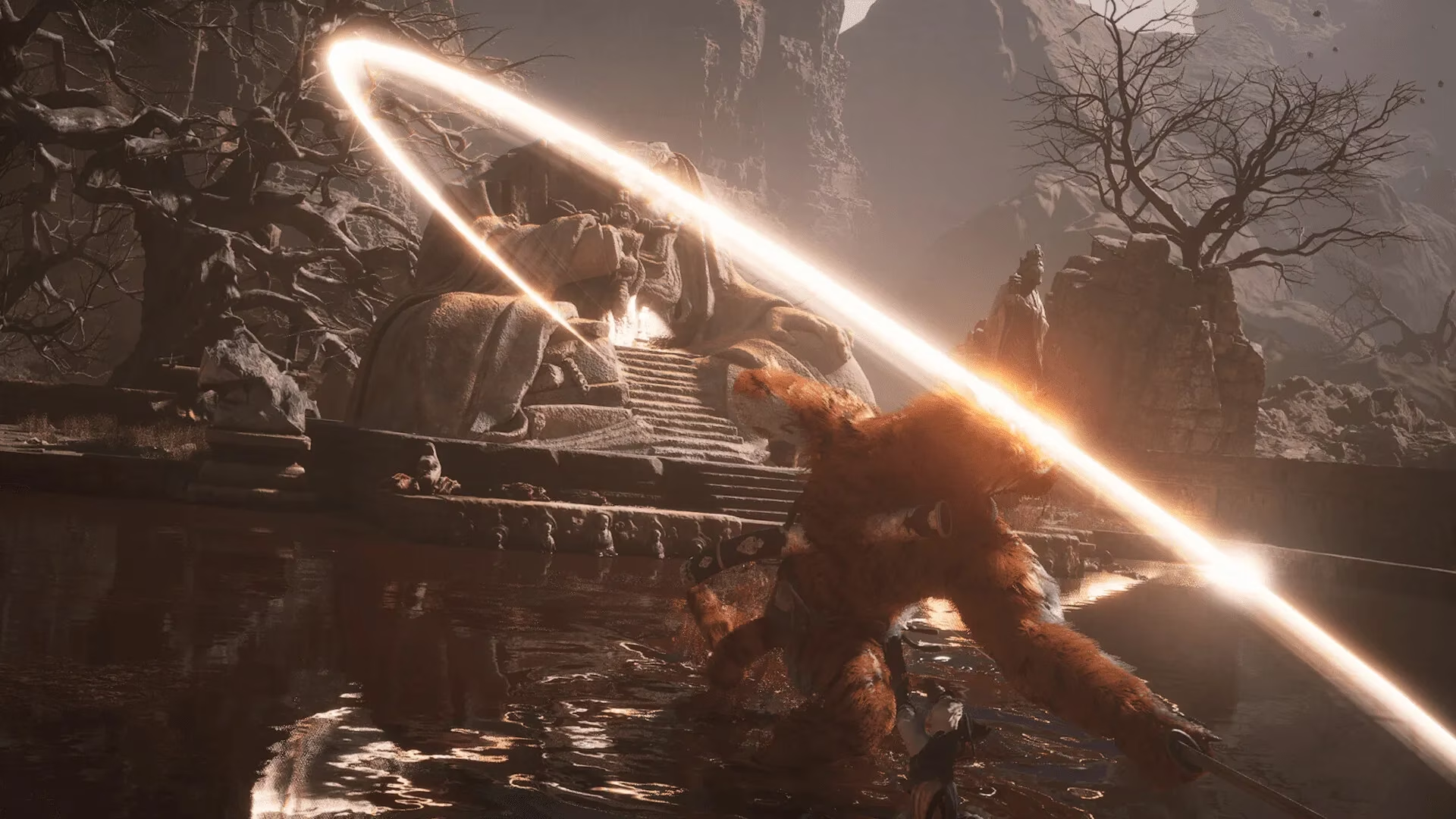
The tiger boss in the Forest of Wolves was the first real test. Marco had breezed through the wolf pack with the sort of confidence that comes from a thousand hours in Elden Ring. But this tiger—all muscle, mirage, and snarling poetry—refused to yield. Its claws tore through his resolve, and its roar seemed to mock his muscle memory. “Man, this cat's got an opinion on everything,” Marco muttered after his twelfth death, laughing at his own absurdity. That encounter alone added three hours to his timer, not because the path was obscure, but because the beast demanded a duelist’s patience. He found himself studying its breath, learning its rhythms like a dance partner that kept stepping on his toes.
That was the secret Black Myth: Wukong whispered to every traveler: time bends to the will of your curiosity. Some players, the completionists who treated every corner of the map as a personal invitation, reported sinking 50, 60, even 70 hours into a single playthrough. Hidden alcoves behind waterfalls, optional dialogue trees that unlocked entire side zones, and secret bosses you’d never meet if you simply followed the golden path—all of it tugged at Marco’s sleeve. He’d often stop, the main quest marker blinking impatiently, and think, What’s another ten minutes? Ten minutes became a fortnight of delightful detours.
The game’s difficulty, once debated feverishly in forums, turned out to be a charming shapeshifter. Game Science had been upfront: this wasn’t meant to be another Elden Ring. The studio called it “an easier soulslike,” a description that made purists raise an eyebrow. But the reality, as Marco discovered, was more nuanced. It felt like God of War had been given a mischievous twin—one that let you breathe between combats but never let your guard down completely. Some reviewers had compared it to Sekiro with a gentler learning curve, and now nodding along, Marco finally understood. The rhythms were there, the parry windows crisp, but the healing resources felt generous, and the stances offered a forgiving variety. There was room to mess up, laugh it off, and try again without the sting of punishment.
Yet the narrative itself played with time in clever, emotional ways. Each chapter, crafted from pages of Journey to the West and spun into biological, mythical grandeur, asked questions that lingered well past the credits. Marco found himself pausing not just for boss strategies but to read poems the game’s elderly spirits recited, poems that felt like ancient whispers encoded in pixels. Those quiet moments—sitting under a cherry tree, watching mist roll over a broken bridge—stretched his 20-hour estimate into something more tender. The game didn’t just fill hours; it invited you to live them.
Months into his journey, Marco finally watched the true ending scroll across the screen. His save file blinked back at him: 42 hours. Not the 15 hours of a speedrunner, nor the 70 of a meticulous explorer, but a number that felt completely, personally earned. He leaned back and remembered the tiger again, that furious gatekeeper. It had taught him the first and most important lesson of Black Myth: Wukong: the length of a game is not a contract. It’s a conversation. And if you listen closely, the Monkey King will always make it worth your while.