Two years after its highly anticipated debut, Black Myth: Wukong has cemented its place as a landmark title in the action RPG genre. The game's journey from a 2020 reveal to a record-breaking launch in 2024 remains one of the most remarkable stories in modern gaming, and its influence continues to resonate with players in 2026.
Long before anyone could press start, the game's pre-order phase sent shockwaves through the industry. When pre-orders went live on June 7, 2024, the response was immediate and overwhelming. Black Myth: Wukong rocketed to the very top of Steam's global bestseller list, a position it would hold with unshakable dominance. It briskly overtook heavyweight contenders like Call of Duty Black Ops 6 and Warhammer 40K Space Marine 2, as well as persistent favorites such as Counter-Strike 2 and PUBG. This wasn't a fleeting spike — the game had already maintained a presence in Steam's top 100 for nine consecutive weeks, but the opening of pre-orders transformed simmering anticipation into a full-blown phenomenon.
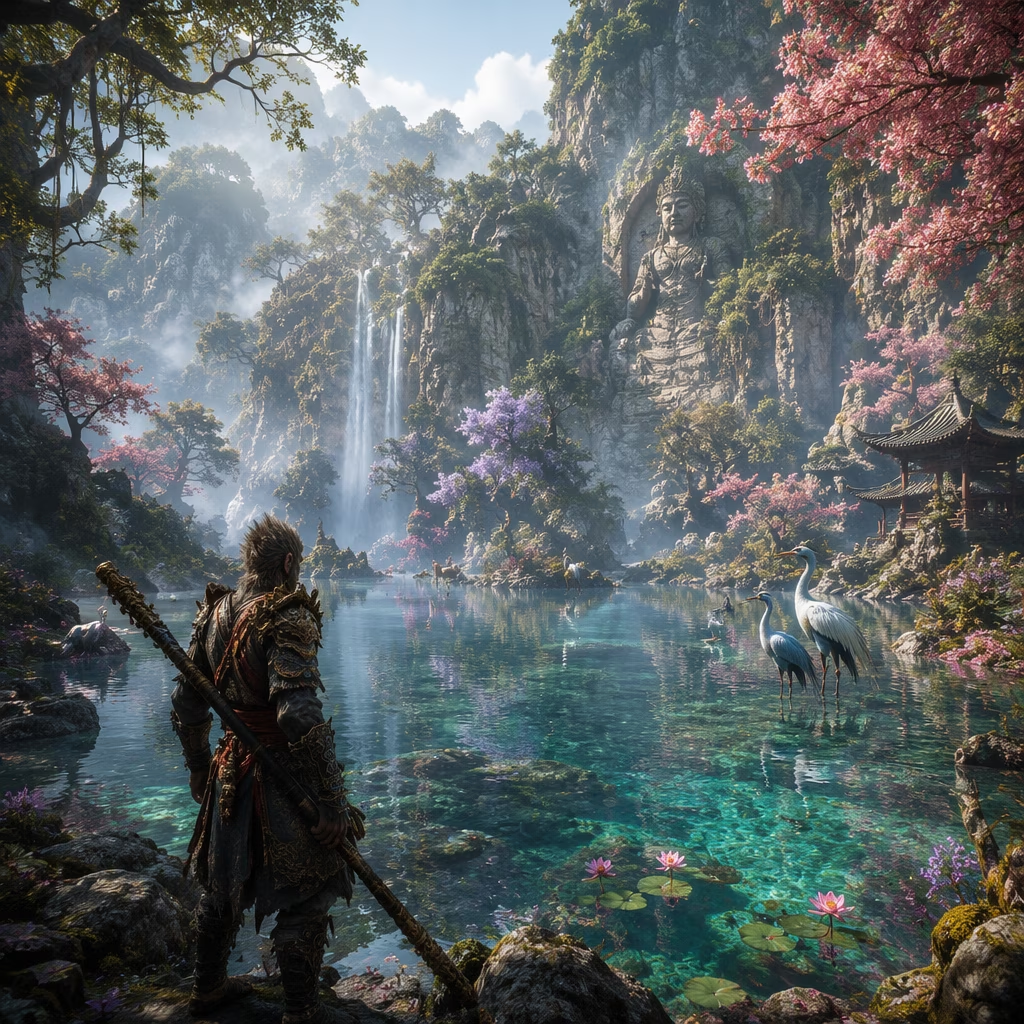
The appetite for a soulslike take on the classic Chinese epic Journey to the West was clearly immense. In a period gifted with standout entries like Lies of P, Elden Ring, Remnant, and Star Wars Jedi: Survivor, Black Myth: Wukong still managed to carve out a unique identity. Trailers showcasing its blistering combat, mythical shapeshifting, and larger-than-life boss encounters felt almost too spectacular to be real — yet players soon discovered that the final experience delivered on every promise. That distinct fusion of high-octane action and deliberate, punishing difficulty resonated far beyond the usual soulslike community.
The build-up was not without controversy. A 2023 report highlighted troubling allegations of sexism within developer Game Science, including accounts involving leadership figures. While the studio faced significant scrutiny, the conversation around the game's artistic achievements remained separate for many fans, and the controversy did little to slow its commercial momentum. Two years on, the discourse has largely shifted toward the game's ongoing updates, community creations, and the enduring appeal of its world.
For PC players in 2024, accessibility was a major talking point. The sheer size of the installation — a mammoth 130 GB requirement — meant careful storage management, but a GeForce Now release offered an elegant workaround. Cloud streaming allowed users to bypass the lengthy download entirely and leap into the adventure, provided their connection could keep up. Even handheld enthusiasts were rewarded: testing on the Steam Deck yielded surprisingly impressive results, with the game proving not only playable but visually striking on Valve's portable device.
The heart of Black Myth: Wukong lies in its ferocious and cinematic boss fights. Each confrontation demands mastery of a combat system that is surprisingly swift for the genre, blending rapid staff strikes, perfectly timed dodges, and an array of magical abilities. Players can freeze foes in their tracks, create shadow clones, or transform into different creatures — each form carrying its own move set and tactical advantages. This fluid arsenal ensures that the learning curve remains engaging rather than exhausting, pushing players to adapt rather than simply memorize patterns.
Weapons and character progression are equally thoughtful. While the staff remains the core tool, its stance system brings meaningful variety, letting players switch between aggressive pressure, defensive poking, or sweeping area control. Unlockable skills and passive upgrades deepen the customization, encouraging experimentation without diluting the central rhythm of combat. The result is a game that feels both instantly recognizable to genre veterans and refreshingly distinct.
Looking back from 2026, Black Myth: Wukong's legacy is defined by more than just sales milestones — though those numbers remain staggering, with lifetime figures comfortably surpassing 20 million copies sold. It opened a door for a new wave of Chinese-developed AAA titles and proved that a rich cultural mythos could captivate a global audience without compromise. The modding community has kept the experience alive with creative additions, while occasional free updates and a substantial expansion have enriched the world further. For those who were there during those feverish pre-order weeks, the memory of seeing a single-player action game dethrone the likes of Call of Duty on Steam remains a vivid testament to the power of something genuinely new.