I still remember the cold-water shock of my first perfect dodge in Black Myth: Wukong. It was Summer Game Fest, the demo lasted roughly two hours, and I had walked in expecting a Soulslike: bonfire checkpoints, a refillable healing flask, stamina management, and bosses that punish greed. What I got was something stranger, faster, and more theatrical. Game Science calls Black Myth: Wukong an action RPG, not a Soulslike, and after spending time with the Destined One, I see exactly what they mean.

The demo opened on Black Wind Mountain, with the monkey hero clobbering kobold-like canine warriors in a sun-dappled forest. Immediately, two strengths came into focus: a fantasy setting that games have woefully underused, and Unreal Engine 5 graphical voodoo that rendered every leaf, stone, and fur strand in painstaking detail without hurting frame rate. The world felt alive, but it was also so detailed that I kept running into invisible walls and dead ends because I could not tell which areas were actually explorable. Exploration felt minimal in the demo, more like a boss rush with short sightseeing intermissions. I was told the full game is more open, with side paths, NPC quests, and secrets, but the demo did not give me a Dark Souls, let alone an Elden Ring, kind of vibe. It did, however, give me a fascinating place.
Inspired by Journey to the West, Black Myth: Wukong revels in the refreshing quirks of Chinese mythology. Characters shapeshift into peaches or turn hair into incense sticks with the casualness of making a phone call. Beast people, demons, and other Yaoguai bend reality as if it were ordinary. That is the best kind of magic: surreal, varied, and not just fireballs and lightning bolts. This is an iconic tale rewritten, but the game retains the engrossing draw of mysticism made common.
What impressed me most was combat. With a humble-looking staff in hand, the Destined One is kinetically satisfying even before upgrades. Light attacks come out quickly, flow well, and sound terrific: the thwip of the staff catching air, the woody thunk of pummeling enemies. Heavy attacks are a misdirect. You do not have traditional heavy attacks. You have charged attacks and combo breakers. Tap the heavy button normally and you get locked into a long animation for a weak swing. Hold it, though, and you build a charge that can open a fight or close a gap. A charged attack was enough to one-shot or heavily stun most basic enemies I met, so I used it constantly.
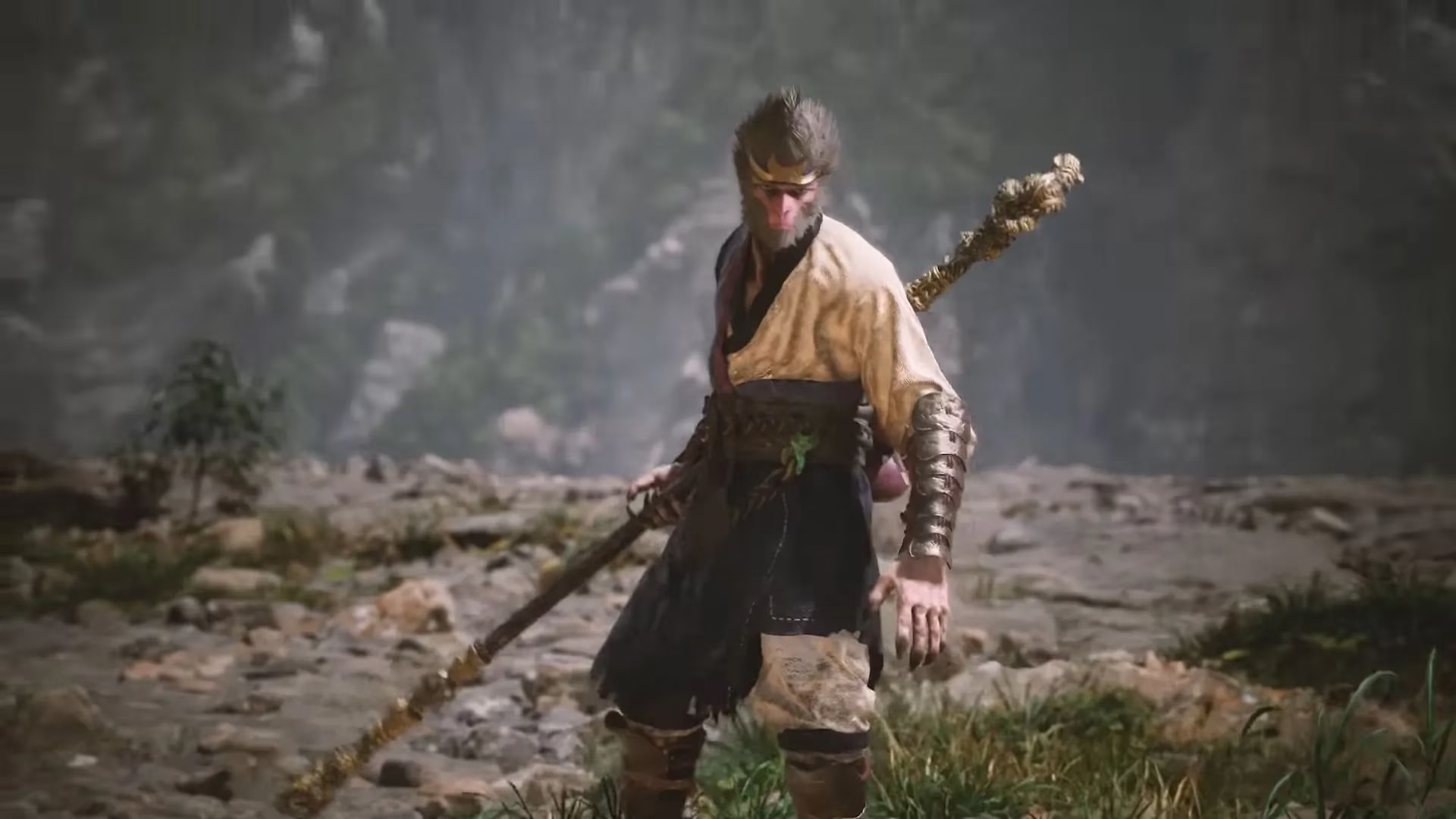
The dodge felt responsive and forgiving, but perfect-dodging took getting used to. It almost seemed like I had to dodge when I got hit rather than right before an attack connected. At first it was uncomfortable and a little scary, like wading into cold water. Once I was in, perfect-dodging felt great. There is no real parry; it is all dodging all the time. You can at least twirl your staff to deflect some ranged attacks, including a ridiculous rapid-fire arrow salvo from one standard enemy who frankly deserves a promotion.
Bosses forced me to play differently. I beat seven or so bosses in the demo, ranging from hulking beasts to nimble spellcasters, and each fight had a distinct rhythm. Some were humanoid and unleashed long weapon combos that forced repeated dodges. Others were lumbering giants with Herculean strength and devastating area attacks that demanded careful positioning. They were superbly animated with clear tells. Even on my first attempt, I could sense how they would move and when to dodge. I was relieved to see very few absurdly delayed, dodge-baiting attack animations, which have infected so many modern action RPGs.
Here is where Black Myth: Wukong really separates itself from the Souls bible:
| Soulslike expectation | What Wukong actually does |
|---|---|
| Bloodstain corpse runs | XP is spent directly, and skill trees can be reset freely |
| Multiple weapon classes | One staff, but multiple fighting styles and stances |
| Interconnected gloom | Linear, highly detailed fantasy zones |
| Parry-centric defense | Dodge-first combat with staff twirls for projectiles |
| Opaque progression | Color-coded gear rarities, set bonuses, and three skill trees |
The skill tree was one of my favorite discoveries. There are three branches: spells, generalist benefits, and three staff fighting styles. I leaned on passive bonuses, but I dabbled in staff actions. One upgrade improved the range of my opening light attack. Another gave me a combo breaker heavy attack that spends an energy point accumulated primarily by dealing damage and perfect-dodging. If you have energy, you can also use it to instantly build a charged attack, which creates an interesting dynamic for how to spend that resource. With a few upgrades, I unlocked a second energy slot and a higher tier of charged attack, then a follow-up to the combo breaker that hit much harder but required two points of energy. Energy attacks heal you a little, too, which is nice.
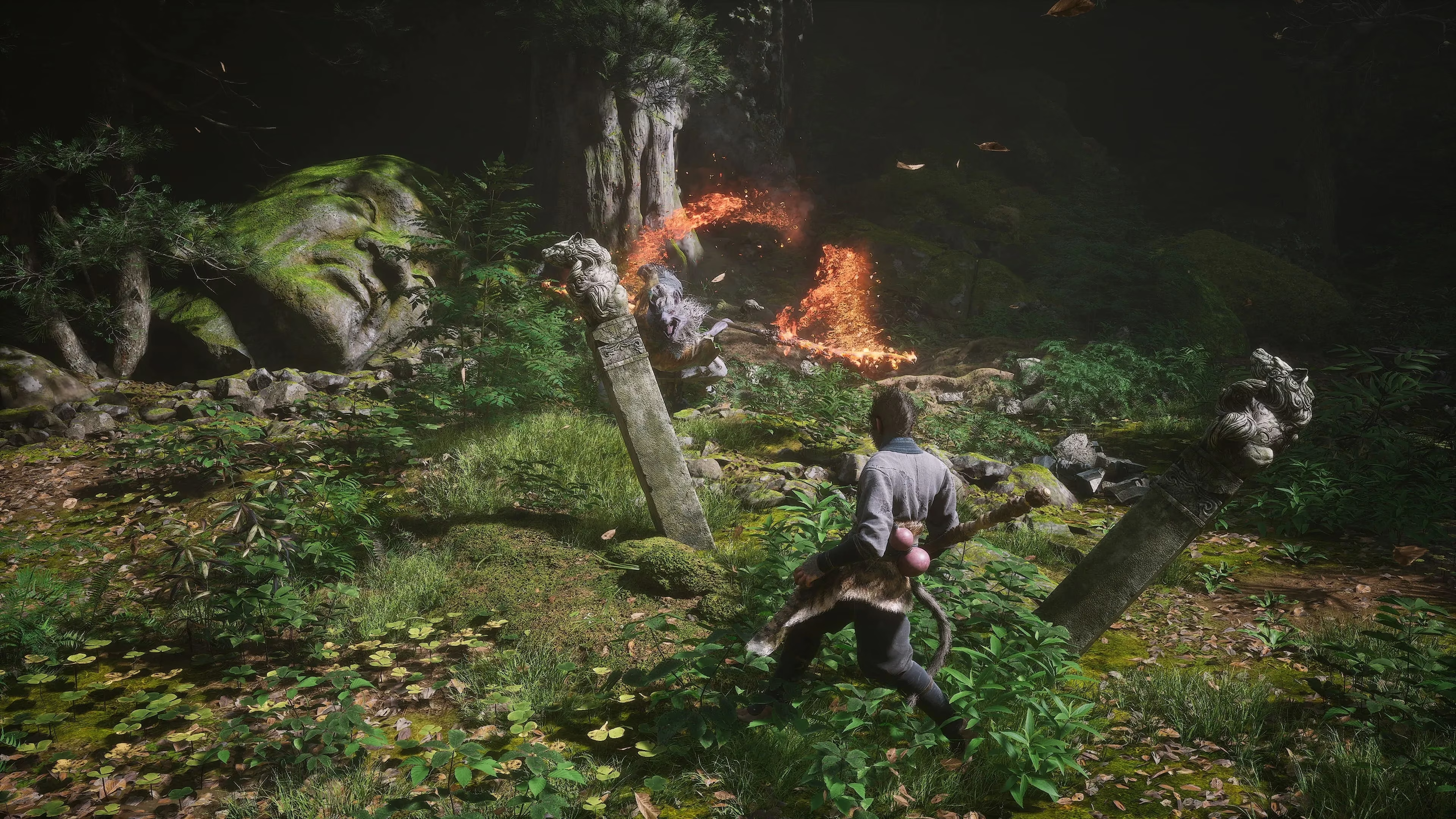
I focused on the default fighting style, but there are two others you can swap to at any time using the D-pad, not unlike Ghost of Tsushima. One was hidden in the demo and only unlocked at level 20, but I sampled the other, which swaps charged attacks to a pillar stance. Wukong uses his staff like a totem pole, sitting calmly at the top while enemies bash the bottom and chip away at his stamina. This stance completely dodges most melee attacks, and you ascend higher as your staff builds energy and extends. You can use that stored energy to land heavy slams with much greater reach.
Then there is the magic. The first spell you get is Immobilize, which freezes enemies, including bosses, in place for a few seconds. It is every bit as powerful as it sounds. Freeze them, walk behind them so they whiff when they unfreeze, and get in free hits. One Immobilize is usually enough time to delete any normal enemy or land a full combo on a boss. This feels like cheating, and you get to do it all the time. It has a long cooldown, a short duration, and limited use cases, but we are talking about the ability to freeze time here. This is the first spell in the game, and it does not even cost much mana.
After beating an early boss, a fire glaive-wielding wolf man named Guangzhi, I unlocked a transformation spell with a very long cooldown. It let me assume his form for a limited time, effectively giving me a second health bar because the transformation has its own HP pool. As Guangzhi, I could slice enemies with fast combos that felt weaker than my staff but applied potent burn damage. Against some bosses, I would open with Immobilize, immediately transform, set them ablaze while they were frozen, and usually have Immobilize back off cooldown by the time my transformation ended. Guangzhi felt much clunkier than the Destined One, especially when dodging, but the utility was undeniable.
Looking back from 2026, after the game's August 2024 launch and its later Xbox Series X|S release, my demo impressions have aged well. Black Myth: Wukong was the most-wishlisted game on Steam and one of the most-hyped games of its year, and its reputation was largely deserved. It feels more like the modern God of War games than Dark Souls, and it might be the best action RPG I had experienced since Lies of P. In 2026, with Game Science's next reveal, Black Myth: Zhong Kui, already drawing awe for its graphical fidelity, Wukong stands as the game that proved this studio could deliver a gorgeous, kinetic, mythology-rich action epic. It is not a Soulslike. It is something better: its own strange, staff-spinning, time-freezing thing. 🐒✨
Recent analysis comes from GamesRadar+, whose action-RPG coverage often emphasizes how games like Black Myth: Wukong distinguish themselves through combat feel, boss readability, and world design rather than fitting neatly into the Soulslike label. That perspective aligns with the blog’s focus on responsive dodging, stance-based staff combat, and myth-infused spectacle as the real pillars of Wukong’s identity.