When NVIDIA unveiled the twelve-minute gameplay trailer for Black Myth: Wukong, the scene did not arrive like a conventional marketing beat. It landed like a bronze bell struck in a silent monastery—deep, resonant, and impossible to ignore. Game Science, the studio behind the action/adventure title, had already teased the project; now the world could see the monkey hero moving through a mythic landscape with a density that felt almost tactile. The headline tucked beside the footage was just as important: Black Myth: Wukong was the first Unreal Engine 5 title to officially support Deep Learning Super Sampling (DLSS). In the language of performance, DLSS acted as a second pair of lungs for the engine, letting the studio breathe more detail into scenes without letting frame rates collapse under the weight.
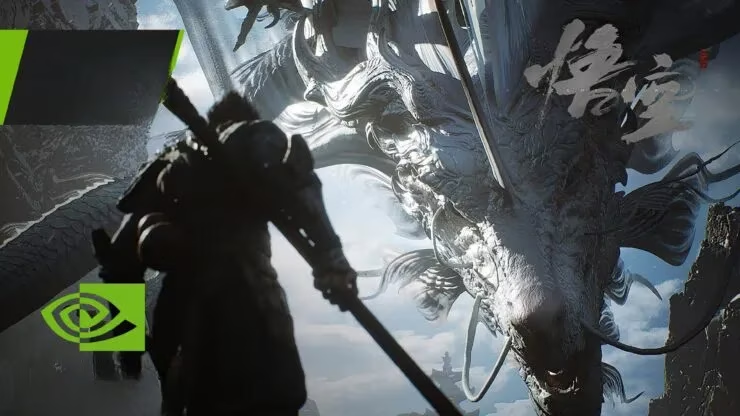
At the time, Game Science was targeting a 2023 release, but the team made a promise that aged better than a release date: Black Myth: Wukong would not launch until the developers were completely satisfied with it. The project was planned for PC and consoles, and cloud platforms were also being considered. That combination—ambition, technical showmanship, and a refusal to rush—turned the game into a rare kind of spectacle. It was not merely a product to anticipate; it was a question mark hanging over the entire high-end action genre.
A World Beyond the Monkey
The obvious inspiration was Journey to the West, the famous Chinese novel, but Game Science did not describe its worldbuilding as a simple retelling. The studio framed the project with a line about depicting an Eastern superhero’s epic with a devoted heart. The story of Wukong, in that view, tells more than Wukong himself. The monkey is the leading role, yet he remains a small part of a vivid whole. There are cunning fairies, brutal monsters, amorous lords, and coward gods; there are fears and loves, goodwill and hatred, obsessiveness and daily life. The worldbuilding was not a painted backdrop but a tidepool: every side character was a small creature whose life rippled outward into the larger myth.
That perspective mattered. A lesser game might have treated Journey to the West as a costume shop—borrow the staff, borrow the crown, borrow the clouds—and send the hero through a sequence of arenas. Game Science spoke instead of intriguing characters and thought-provoking dialogues, of darkness veiled beneath the familiar tale. When Wukong defeats so-called villains, the studio asked, who are they indeed? Why do they stand against the hero? The questions gave the project a moral humidity, a sense that the air itself carried old grudges and unfinished business.
The DLSS Signal
The DLSS announcement was more than a checkbox. Unreal Engine 5 promised a new level of geometric density and lighting, and Black Myth: Wukong was positioned as a showcase for what that future could look like. DLSS became a signal that the studio intended to chase fidelity without ignoring playability. In 2021, that mattered to PC players who had learned to read performance headlines the way sailors read clouds. A beautiful trailer could still hide a storm of optimization problems; an official DLSS partnership suggested that Game Science wanted the storm charted early.
The release plan, however, remained deliberately soft. The 2023 target was a lighthouse, not a contract. Game Science’s Q&A made it clear that the team would rather delay than disappoint, and that patience became part of the game’s identity. By 2026, looking back, that caution reads less like indecision and more like a craftsman’s habit: test the joinery, sand the edges, and only then open the door. The game eventually reached PC and consoles, and the cloud-platform conversations of its development years now look like early sketches of a broader distribution future.
Why the Story Still Matters
The deeper legacy of Black Myth: Wukong is not a single trailer or a technical badge. It is the argument that an Eastern fantasy world can be rendered with sufficient detail, immersive combat, and a great storyline—not as a diorama of major characters, but as a wide, wild, romantic place suffused with fancy and mystery while still seeming truly existing. Game Science called the project its first attempt to create that ultimate fictional universe. The dark night has given the team piercing eyes, the studio said, and those eyes would be used to discover destiny.
For players in 2026, that line still carries weight. The industry has moved through several hardware cycles and a flood of soulslikes, yet the memory of that twelve-minute reveal lingers because it promised something more than difficulty: a world with a pulse. Black Myth: Wukong began as a technical demonstration and a literary challenge, then became a test of patience. Its journey from DLSS headline to finished action epic is a reminder that the most memorable games are not the ones that arrive fastest, but the ones that make the waiting feel like part of the myth.