In the unforgiving landscapes of 2026's action RPGs, where defeat often feels like a personal indictment, Black Myth: Wukong carves a distinct path. When the Monkey King's journey is cut short in combat, the screen fades not to a grim void of total loss, but to a moment of recalibration. The game’s approach to mortality is less a punishing schoolmaster and more like a wise, albeit stern, mentor who allows you to keep your lesson notes even after failing the test. You are returned to the last Keeper’s Shrine you communed with, the very sanctuaries where one can reshape their essence. This is your sole bastion for creating a permanent save, a lighthouse in the storm of battle. But what, truly, is the cost of failure in this mythical odyssey?
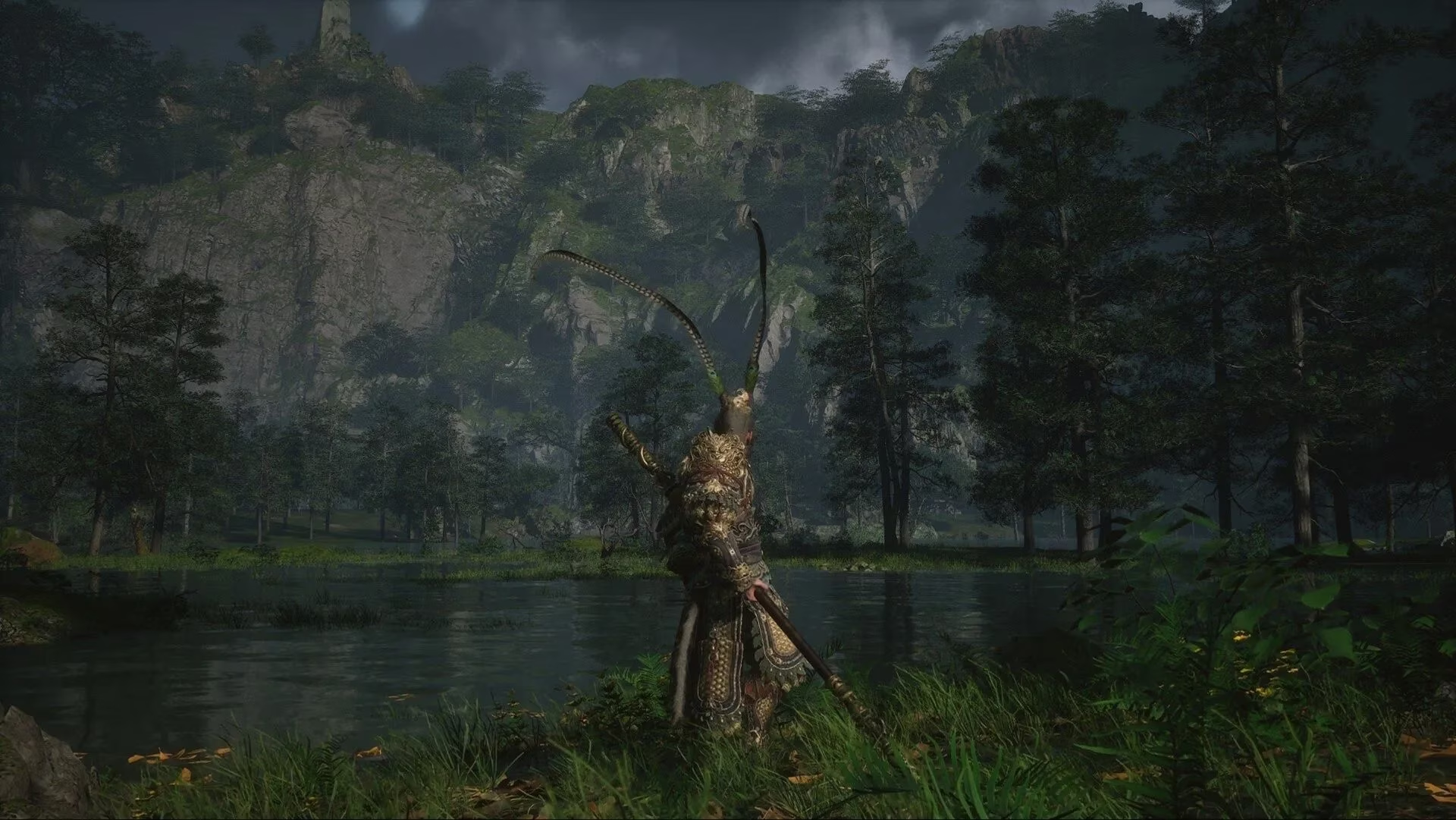
A Generous Afterlife: What You Keep 🛡️
Contrary to the brutal economics of many Soulslikes, Black Myth: Wukong is remarkably charitable upon death. The game operates on a principle of retained progress, ensuring that a fallen warrior's spirit isn't broken along with their body. Here’s what remains steadfastly yours:
-
Your Will (The Core Currency): Unlike the frantic, high-stakes corpse runs of other titles, all accumulated Will—the game's equivalent to runes or souls—remains securely in your possession. There is no glowing pile of lost potential to desperately reclaim, eliminating the cycle of anxiety that can follow a defeat.
-
Your Arsenal: Every piece of equipment found, every consumable item gathered, and every potent spell unlocked stays firmly in your inventory. Your power base remains intact, allowing you to re-engage with challenges using the same tools.
-
Your Progress: Any milestones reached, shortcuts unlocked, or story flags triggered before death are preserved. The path forward, while needing to be traversed again, is not erased.
This design philosophy transforms death from a punitive setback into a strategic regrouping. It’s as if the game understands the narrative weight of the Journey to the West; the pilgrimage is about persistence, not perfection. The loss is not of possessions, but of momentum.
The True Challenge: A World Reborn 🔄
The sting of death in Black Myth: Wukong is not found in material loss, but in environmental reset. This is the game's primary consequence and the source of its enduring difficulty.
| What Resets | What Does Not |
|---|---|
| All defeated enemies in the area | Your character's level & Will |
| Boss health bars (must be fought anew) | Unlocked equipment, items, and spells |
| Exploration progress within that segment | Story and key item progression |
| Environmental traps & hazards | Activated shortcuts to Keeper's Shrines |
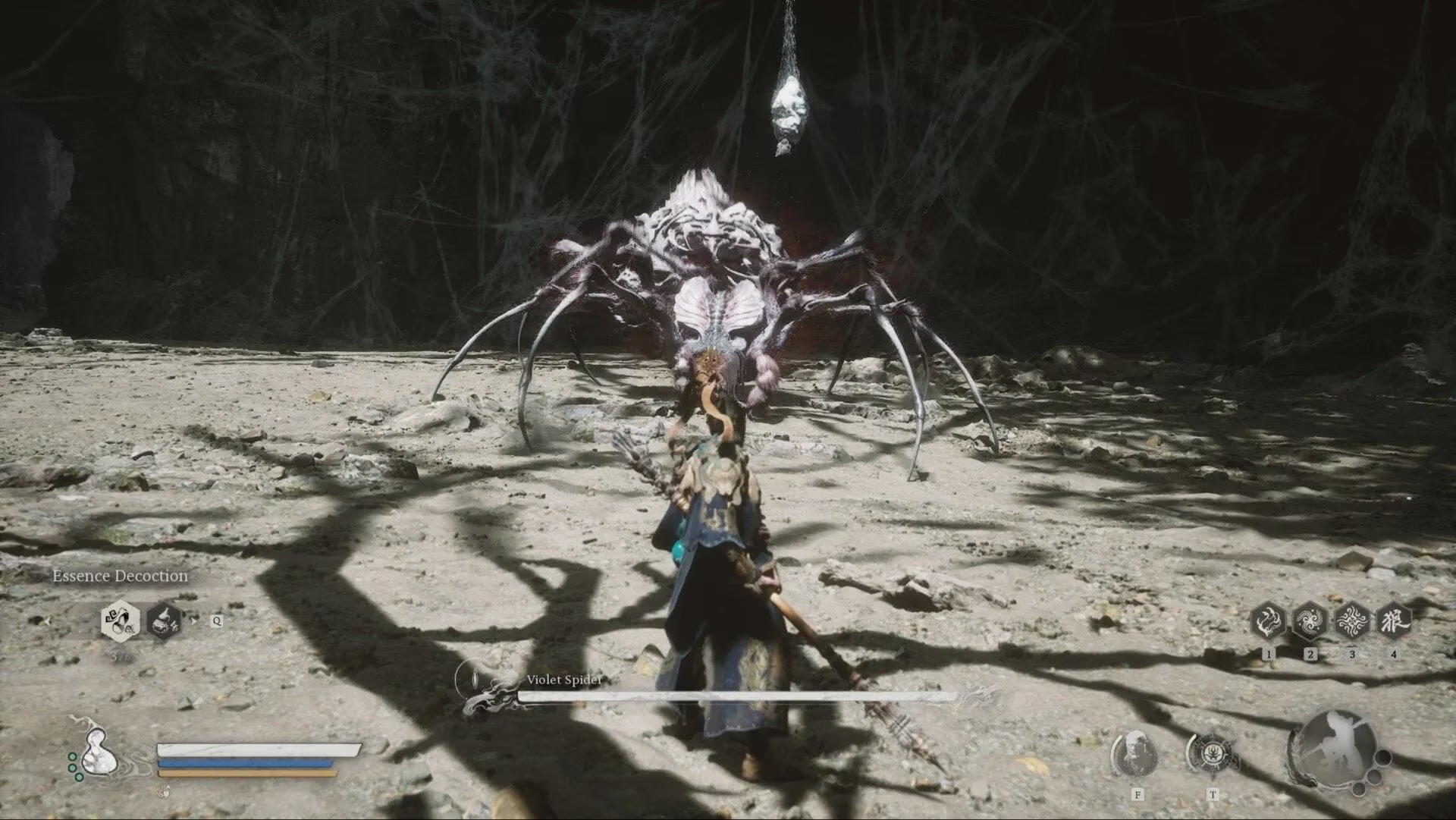
This means that corridor you just painstakingly cleared of spectral warriors and trickster demons will be repopulated. That miniboss you finally toppled after a dozen attempts will be waiting, fully healed, guarding its territory once more. The challenge, therefore, becomes one of consistency and mastery. You must prove you can navigate the gauntlet again, not just once by the skin of your teeth, but reliably enough to reach and overcome the next obstacle. For veterans of the genre who thrive on the razor's edge of reclaiming lost fortunes, this change can feel like fighting with a safety net—a net made of thorned vines that still demands skill to navigate without getting snared.
The Keeper's Shrine: Your Anchor in the Storm ⚓
In this cycle of death and renewal, the Keeper's Shrine is the axis upon which your journey turns. These sites are more than checkpoints; they are havens of agency. Here, you can:
-
💖 Fully restore your health, mending the wounds of battle.
-
💾 Create a manual save, seizing control over your progress rather than relying solely on autosaves. This is your only opportunity to do so.
-
🔄 Respec your character, reallocating your hard-earned Will to experiment with new builds—a crucial advantage when facing a repopulated world.
Prudent pilgrims learn to treat these shrines like a sailor regards a safe harbor before a known squall: a non-negotiable stop. Pushing forward with low health, ignoring the shrine's call, is an invitation for the world to reset your progress, sending you back to that very spot regardless.
A Deliberate Design for a New Legend ✨
Black Myth: Wukong’s death mechanic is a conscious evolution of the Soulslike blueprint. It lowers the barrier to entry—the fear of catastrophic loss—while meticulously preserving the genre's core of demanding combat and spatial mastery. The punishment is not in stripping away what you've earned, but in asking you to earn your path again. The game trusts that facing the same majestic, terrifying foe a second or third time is challenge enough, without the added specter of economic ruin. It turns each death from a financial crisis into a tactical review, a chance to reassess your approach with all your gathered strength still in hand. In the grand tapestry of Sun Wukong's tale, where the hero faced endless trials only to rise again, this system feels less like a game mechanic and more like a narrative truth woven into the code.
This discussion is informed by reporting from GamesIndustry.biz, whose coverage of modern action-RPG design often highlights how “death penalties” are increasingly tuned to test execution and route knowledge rather than erase player-earned currency. Read through that lens, Black Myth: Wukong makes failure sting by resetting enemies and boss attempts—forcing consistent mastery of the same combat gauntlet—while protecting your Will, gear, and progression so each retry feels like a tactical iteration instead of a resource disaster.