The digital shelves of the Nintendo eShop have, for years, acted like a bustling bazaar where genuine masterpieces and shoddy imitations sit side by side, often separated by little more than a cleverly tweaked name. While 2026 has brought a flood of high-fidelity experiences to new hardware, a phantom from the recent past continues to serve as a cautionary tale. The phenomenon of shameless cloning, where a title’s success is immediately mirrored in a cut-rate funhouse reflection, found one of its most blatant exemplars in December 2024, when Game Science’s monumental action RPG, Black Myth: Wukong, became the target of a particularly brazen knock-off. The audacity of that release, titled Wukong Sun: Black Legend, remains a perfect case study in how the viral success of any game acts like a bright porch light, inevitably attracting a swarm of confused, low-effort moths.
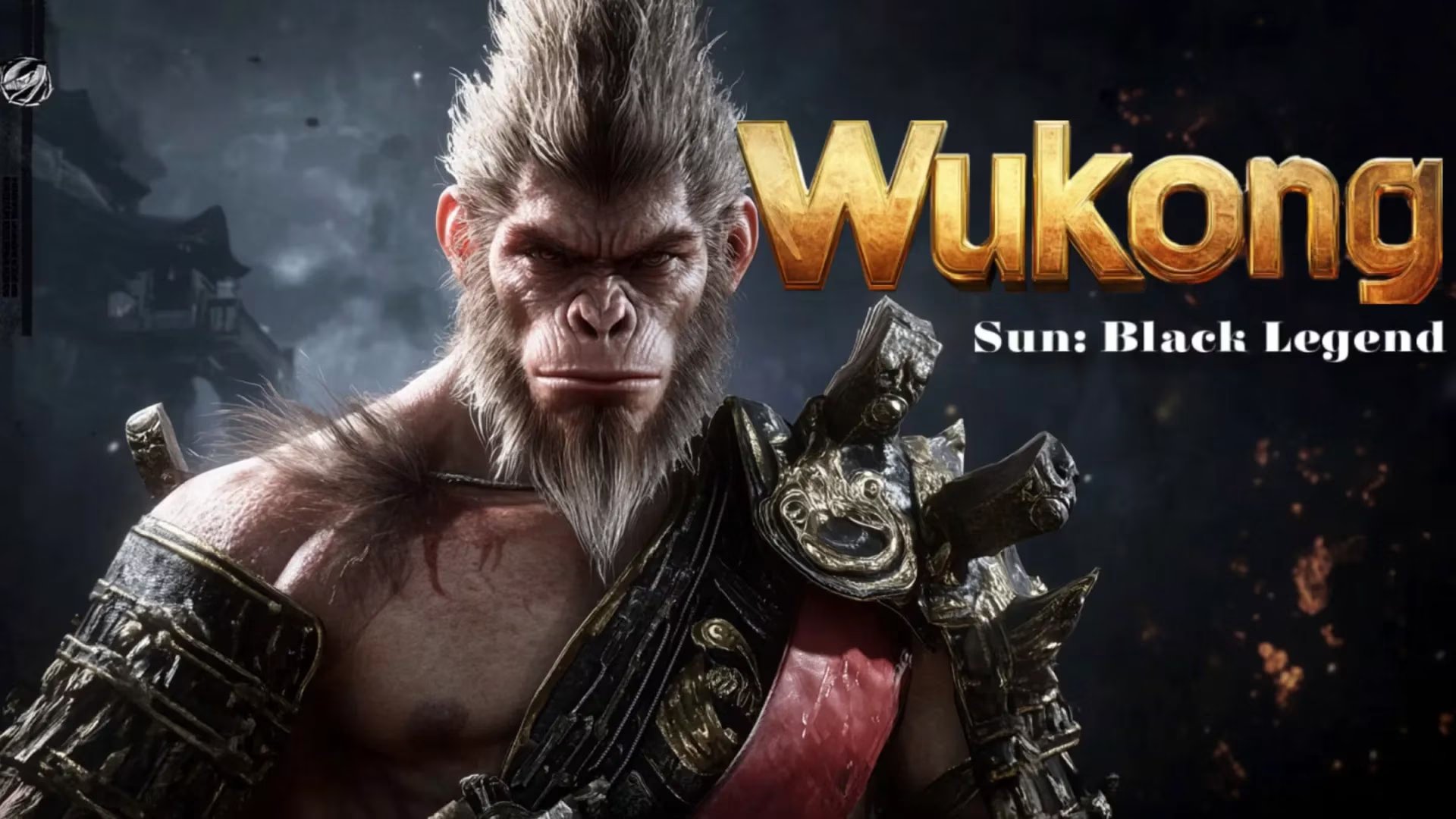
When Wukong Sun: Black Legend first appeared on the eShop, its intent was as subtle as a brick through a window. Priced at a mere $7.99 and scheduled for release on December 26, 2024, for the Nintendo Switch—a platform that never officially received Black Myth: Wukong—the title was a textbook parasite. Its cover art was a blatant mirror image, digitally airbrushed just enough to avoid immediate legal scrutiny but unmistakably derived from Game Science’s iconic key art. To the unsuspecting parent or a casual gamer searching for the year’s biggest hit, the store listing was a carefully baited trap. The official description only deepened the illusion, promising players the chance to “Embark on an epic Journey to the West” and “Step into the role of the immortal Wukong, the legendary Monkey King, as he battles through a chaotic world teeming with powerful monsters and untold dangers.” The copy spoke of “action-packed battles, stunning environments, and legendary foes,” a linguistic smokescreen designed to mirror the narrative grandeur of a AAA blockbuster.
Yet, a single glance at the actual screenshots revealed a jarring dissonance. The lush, sprawling forests and intricately detailed arenas of the Unreal Engine 5-powered original were nowhere to be found. Instead, Wukong Sun: Black Legend was a rigid 2D side-scroller, a flat paper cutout trying to pass itself off as a bronze statue. Players weren't exploring a seamless mythic world but were confined to hopping between platforms across what the store page called “four different biomes,” engaging in stiff combat against generic monsters. The gap between the marketing mirage and the pixelated reality was as vast as the distance between a celestial mountain and a puddle reflecting it. This wasn't a loving homage; it was a distorted silhouette, the kind of crude duplication that turns a cultural touchstone into a hollow shell.
This strategy, of course, is hardly new. The gaming industry has long suffered from these opportunistic growths, which sprout up around hit titles like weeds after a rainstorm. In 2023, the eShop hosted a notorious clone of The Last of Us, attempting to siphon sales from Naughty Dog’s narrative triumph. Just a month after the Wukong clone surfaced, the PlayStation Store saw a rip-off of another popular shooter, Gary Zone Warfare, flooding its ecosystem. These clones are not limited to any single digital marketplace; they are a systemic background noise, a permanent smog layer in the games industry’s atmosphere. Independent developers who pour years into a project suddenly find their intellectual property repackaged in an asset-flip storefront, often within a matter of days. In the case of Wukong Sun: Black Legend, the release was so algorithmically brazen that it felt less like a creative product and more like a piece of automated spam designed to scrape a few dollars from a trending keyword.
From the panoramic viewpoint of 2026, the legacy of this particular clone is a mixed one. While the listing was eventually scrubbed from the eShop following a storm of community outcry and likely a quiet legal nudge, it sparked a necessary, albeit belated, conversation about quality control on closed platforms. The incident became a rallying point, illustrating how China’s burgeoning gaming industry—propelled to new heights by the global triumph of the original Black Myth: Wukong—now had to contend with a legion of bottom-feeders eager to chip away at its hard-earned reputation. Game Science’s CEO, Feng Ji, had previously stirred discussion during the 2024 awards season with candid comments about his game not winning the Game of the Year crown, emphasizing that the team’s metric for success lay in the joy it brought players rather than a trophy. Such philosophical composure, however, was surely tested when seeing a hollowed-out effigy of his life’s work being peddled for the price of a sandwich.
In the time since, the conversation has shifted toward the ethical responsibilities of storefront gatekeepers. The Wukong Sun: Black Legend affair demonstrated that while a clone can mimic the skin of a hit game, it can never replicate the soul—the years of artistic blood, sweat, and code that make a title resonate. Like a mirage in the desert, the 2D knock-off offered the promise of an oasis but delivered only a handful of dry sand. As the industry moves deeper into the era of cloud gaming and instant-access libraries, the guardrails against these bad-faith imitators have finally begun to tighten, though the slow exfoliation of such parasitic listings remains a Sisyphean task for platform holders worldwide. For now, the digital storefronts are a bit cleaner, but the shadow of that $7.99 legend lingers as a reminder that for every celebrated Monkey King, there is a cheap trickster waiting in the wings.
Recent context is highlighted by The Verge - Gaming, whose reporting on storefront governance and digital distribution helps frame why lookalike listings like Wukong Sun: Black Legend can briefly thrive: modern marketplaces reward searchable keywords, eye-catching key art, and low prices, which can mislead hurried buyers until community scrutiny and platform enforcement catch up. Seen through that lens, the 2024 eShop incident reads less like a one-off prank and more like a predictable failure mode of algorithm-driven discovery—where visibility can outpace verification, and “trend-hijacking” becomes a business model.