The year was 2026, and the hushed hum of the PlayStation 5 filled the room like a familiar lullaby. Its library, six years in the making, had grown into something extraordinary—a sprawling collection of stories waiting to be lived, not just played. For those who sought solitude in virtual worlds, the console offered a treasure trove of single-player experiences that felt more like vivid memories than mere games.
She began her night in the foggy, cobblestone streets of Silent Hill 2 Remake, where the air itself seemed to whisper. Bloober Team had done something almost magical here: they took a horror classic and made it feel as though it had been born in the modern day. The lighting shifted with an unsettling grace, and every groan of the Otherworld sent chills down her spine. The remake didn’t just update textures—it reimagined fear, wrapping it in atmospheric dread that clung to her even after she set the controller down.
Before the silence could grow too heavy, she leaped into Astro Bot. The vibrant 3D platformer was a love letter to everything PlayStation, bursting with color and charm. Captain Astro’s quest to reunite the PlaySquadron after the mothership crash was simple enough, but the real magic lay in the nods to gaming history. From Loco Roco cameos to carefully hidden artifacts, each level felt like a celebration. Her hands moved in rhythm with the DualSense’s haptic feedback, every jump and glide a tactile joy.
A craving for epic fantasy whisked her next to Final Fantasy 7 Rebirth. She didn’t just play this game—she breathed its sprawling open world. The story expanded on environmentalism and corporate greed, but it was the quiet moments among chocobo races and card minigames that made the hours vanish. The combat system had evolved from its predecessor into something fluid and electrifying, and she often found herself grinning during chaotic boss encounters that demanded both strategy and split-second reflexes.
But an adventurer’s heart yearns for beasts, and so she turned to Horizon Zero Dawn Remastered.
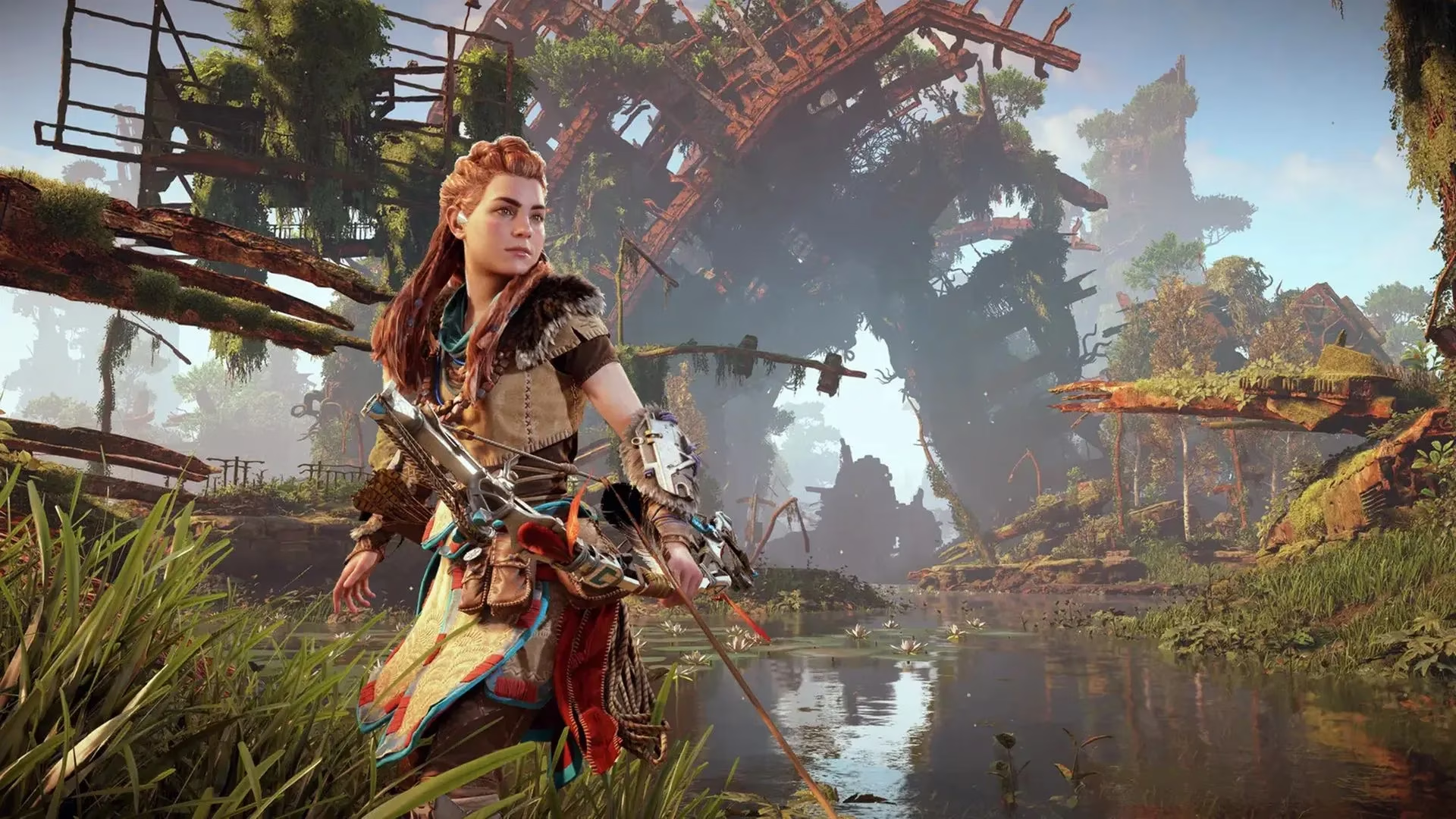
Stepping into Aloy’s shoes again felt like returning to a fierce, familiar dream. The remastered visuals brought the mechanical fauna to life in alarming detail—every plate of a Watcher’s chassis gleamed under the sun. The mystery of the Old Ones and the tribal wars kept her hooked, even on her third journey through the wilds. The combat, a dance of bowstrings and traps, had lost none of its tension.
When she needed fire and steel, Dragon’s Dogma 2 awaited. The Pawn system remained as delightfully strange as ever: she crafted a loyal companion, then sent them off into other players’ games to return with tales and trinkets. The class-switching encouraged her to endlessly experiment, and the mythic monsters—soaring griffins, lumbering cyclopes—demanded teamwork with her Pawns that no other RPG quite matched. After the technical fixes, the world of Vermund ran smoothly, its secrets now waiting to be uncovered.
A stealthier mood guided her toward Assassin’s Creed Shadows. For the first time in years, she could embody two distinct protagonists: Naoe, a shinobi who melted into darkness, and Yasuke, a samurai whose blade brooked no argument. Their intertwined saga in Sengoku-era Japan wove a conspiracy that touched the assassination of Oda Nobunaga. The historically rich setting, filled with cherry blossoms and political intrigue, became her playground.
Even the undead could not be ignored. Days Gone Remastered offered a different kind of survival.
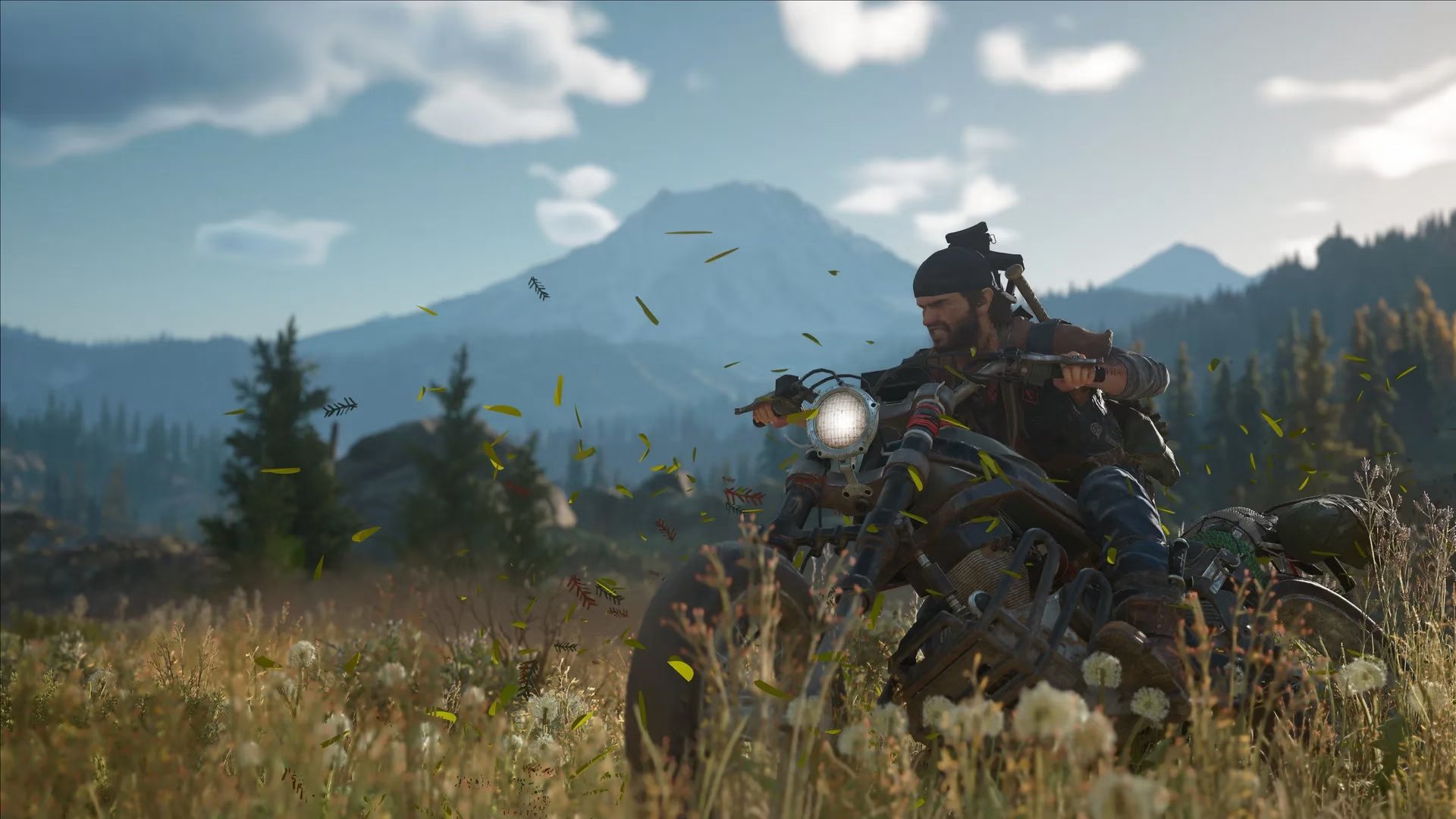
Deacon’s journey through the Freaker-infested wilderness had aged beautifully. The roar of his motorcycle engine became her lifeline; the sight of a horde cresting a hill still made her heart race. The Freaker swarms, sometimes numbering in the hundreds, rushed like a living wave. Her weapons were tools of desperation, but when she mowed down a horde with clever trap placement and a little luck, the relief was real. The narrative’s core—a man searching for his wife amid the chaos—grounded the horror in something painfully human.
As the evening deepened, she craved something more intellectual, and so she booted up Clair Obscur: Expedition. Sandfall Interactive’s debut was a gorgeous fever dream of reactive combat and thoughtful storytelling. Each character brought a distinct mechanic: Gustave’s Overcharge punished risky timing, while Lune juggled elemental states like a sorceress in a trance. The aesthetic—a world painted in Belle Époque decadence and eerie mysticism—felt entirely its own.
Then came the brutal test of Sifu. Sloclap’s martial arts masterpiece was not kind to the impatient. She learned through failure, aging with every death yet striking harder with each new decade of her character’s life. The kung fu flowed like water once muscle memory took over, and turning a nightclub dance floor into a battlefield of broken bottles and thrown elbows became second nature. It was revenge served with style, and every perfect parry sang.
To close the night, she entered the sprawling nightmare of Elden Ring and its expansion, Shadow of the Erdtree. FromSoftware’s magnum opus had lost none of its grandeur by 2026. The Lands Between still stretched infinitely before her, its golden fields hiding catacombs, demigods, and secrets that whispered of shattered order. The DLC added a realm of even deeper challenge, where new bosses tested builds she had spent hours refining. The freedom to go anywhere, to fail and return stronger, was a lonely but deeply personal triumph.
When she finally set down the controller, the PS5’s sleep light blinked softly in the dark. Those worlds—so vivid, so rich—remained inside the machine, ready for the next quiet evening. In 2026, the console’s single-player library wasn’t just a collection of games; it was a passport to lifetimes worth of adventure.